Repairing torn earlobes is a surgical procedure to restore natural shape and integrity. Learn about Mr. Roshan Vijayan's expert process, aftercare, and expected results for split or elongated earlobes in London and Hertfordshire.
Repairing Torn Earlobes: Surgical Solutions for Earlobe Reconstruction
Repairing torn earlobes restores the ear's natural shape and integrity, addressing damage from trauma, heavy jewellery, or gauged ear stretching. This guide details the surgical process for repairing torn earlobes, from initial consultation to advanced suturing techniques and post-operative care. It outlines what to expect during the surgical procedure, typically performed under local anaesthetic, and provides essential post-operative instructions for optimal healing time. Understanding this comprehensive approach to earlobe reconstruction helps patients achieve desired aesthetic outcomes and regain confidence.
Mr. Roshan Vijayan, a Consultant Plastic Surgeon, offers expert earlobe reconstruction services. His practice focuses on safe, tried-and-tested surgical techniques to achieve natural, well-proportioned aesthetic outcomes for patients seeking split ear lobe repair.
To explore your options, contact us to schedule your consultation. You can also reach us via: Book your skin procedure
Repairing torn earlobes is a surgical procedure to restore the earlobe's natural shape and integrity. A split or elongated earlobe, caused by trauma or stretching from heavy jewellery, can affect appearance and self-confidence. This guide covers the surgical process with Mr. Roshan Vijayan, including the procedure, aftercare, and expected results in London and Hertfordshire.
What Causes Torn or Stretched Earlobe Damage?
Earlobe damage occurs when the skin and soft tissue of the lobule are split or stretched beyond their capacity to recover. This can happen suddenly or over time, resulting in a tear that requires surgical correction.
Common Reasons for Earlobe Tears and Stretching
The primary reasons for needing earlobe repair include:
- Acute Trauma: An earring being forcefully pulled can cause a clean split. This can happen if it snags on clothing, is grabbed by a child, or during an accident.
- Prolonged Use of Heavy Earrings: The consistent weight of heavy earrings can gradually stretch the piercing hole over years, leading to a complete tear or an enlarged opening.
- Gauged Earlobe Stretching: Intentionally stretching earlobes with gauges or plugs creates large holes. Some later wish to reverse this with gauged ear repair.
- Allergic Reactions: A severe allergic reaction to metals in earrings can weaken the surrounding tissue, making it more susceptible to tearing.
Each type of damage requires a tailored approach to ensure a natural and durable outcome.
The Surgical Process: From Consultation to Repair
Surgical earlobe repair is a procedure to restore a natural contour and enable future piercing. The process is typically completed in one visit, starting with a consultation to establish goals.
Your Initial Consultation with Mr. Vijayan
During your consultation, Mr. Vijayan will examine the extent of the earlobe damage. He will evaluate the surrounding skin quality, the tear's size and shape, and any scar tissue. You can discuss your aesthetic goals, such as closing the tear or reshaping the earlobe. Mr. Vijayan will explain the surgical plan, the local anaesthetic used, and answer your questions. Learn more about Mr. Vijayan's expertise.
What Happens During the Earlobe Repair Procedure?
The procedure is performed in a clinical setting and is quick and comfortable.
- Preparation: The earlobe and surrounding area are cleaned with an antiseptic solution to minimise infection risk.
- Anaesthesia: A local anaesthetic is injected to numb the earlobe. You will be awake but feel no pain.
- Excision: Mr. Vijayan removes the healed skin edges of the split or stretched tissue. This creates fresh surfaces that can be joined for optimal healing.
- Reconstruction: The fresh edges are aligned and sutured in layers. This technique ensures strength and a cosmetically pleasing result, recreating a natural earlobe contour.
Advanced Suturing Techniques for Optimal Earlobe Reconstruction
The success of an earlobe reconstruction depends on the suturing technique. The goal is a strong repair that is nearly invisible once healed. Specialised methods minimise scarring and restore the earlobe's natural, curved border.
Achieving Natural Aesthetics with Precision Suturing
Different tears require different approaches. A simple, straight tear may be addressed with a direct closure, while complex cases benefit from advanced techniques. For instance, a Z-plasty rearranges small, triangular flaps of skin. This technique breaks up the straight scar line, making it less noticeable by redirecting tension and aligning it with natural skin creases. This prevents a notched or indented appearance after healing. Sutures are placed in multiple layers: deep, dissolvable stitches for structural support and fine, superficial stitches for precise edge alignment. This layered approach promotes a flat, subtle scar and a durable repair.
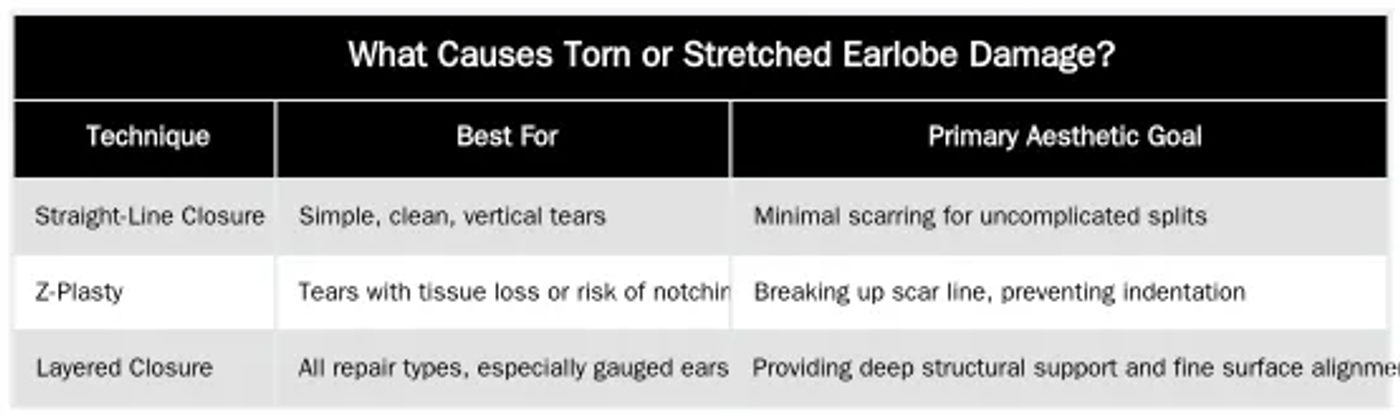
An overview of common suturing methods used in earlobe repair and their intended outcomes.
Post-Operative Care and Healing Timeline
Proper aftercare is essential for recovery and the best aesthetic result. Following Mr. Vijayan's post-operative instructions minimises complication risk and ensures the repair heals well. Healing time is short, and most patients return to normal activities quickly.
Essential Aftercare Instructions for a Smooth Recovery
A small dressing may be applied immediately after the procedure. Guidance typically includes:
- Wound Care: Keep the area clean and dry for 24-48 hours. Afterwards, gentle cleaning with a prescribed solution may be recommended. An antibiotic ointment is often applied to prevent infection and keep the wound moist.
- Pain Management: Minimal discomfort can be managed with over-the-counter pain relievers like paracetamol.
- Activity Restrictions: Avoid strenuous activities for a few days. Avoid pressure on the repaired earlobe when sleeping.
- Suture Removal: Surface stitches are removed in-clinic 7 to 10 days after the procedure.
Following these steps is a key part of the split ear lobe correction process.
Earlobe Repair Healing Milestones
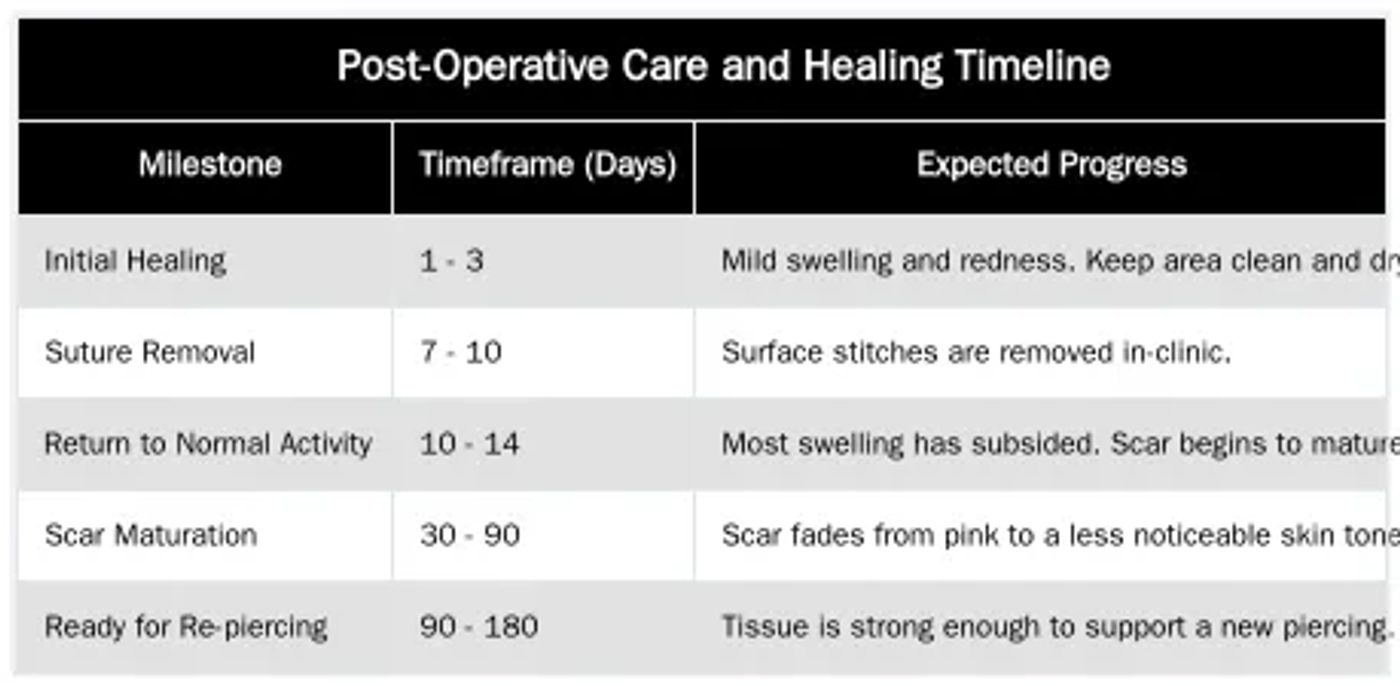
A general timeline for healing after earlobe repair surgery. Individual recovery may vary.
Why Choose Mr. Roshan Vijayan for Earlobe Repair?
Facial aesthetics requires a surgeon with technical skill, an understanding of proportion, and a commitment to natural results. Mr. Roshan Vijayan's background makes him a trusted choice for procedures in Hertfordshire and London.
Expertise in Facial Aesthetics and Reconstructive Surgery
Mr. Vijayan is a Consultant Plastic Surgeon on the GMC Specialist Register for Plastic Surgery. His training at UK hospitals, including Guy's & St Thomas' and Chelsea & Westminster, gave him experience in aesthetic and reconstructive procedures. He holds the Fellowship of the Royal College of Surgeons in Plastic Surgery, FRCS(Plast), the highest standard for the specialty.
This dual expertise means he approaches earlobe repair with a reconstructive mindset, restoring function and form. He uses safe, tested techniques for balanced outcomes. Patient goals are integrated into a custom surgical plan. Explore the techniques for split earlobe repair he employs.
Restoring Confidence: Expected Results and Long-Term Care
Earlobe repair surgery restores the earlobe's natural state, improving confidence and allowing earrings to be worn again. The results are permanent. With proper care, the repaired earlobe remains strong and aesthetically pleasing.
Achieving Natural and Balanced Earlobe Aesthetics
After healing, you will have a smooth, naturally contoured earlobe. The scar will be a fine line that matures and fades over several months, becoming difficult to detect. The earlobe's structural integrity is restored.
Re-piercing is possible after the tissue has healed, typically 3 to 6 months post-surgery. The new piercing should not be placed on the scar line but slightly to one side to prevent stress on the repaired tissue. Avoid heavy earrings to prevent re-stretching or tearing. A guide on what to know about split earlobe repair provides more details.
Ready to Repair Your Earlobe? Book Your Consultation
If you have a torn, split, or stretched earlobe, schedule a consultation. A meeting with Mr. Roshan Vijayan provides a diagnosis and a personalised treatment plan.
Contact us to arrange your appointment in Hertfordshire or London. You can also book your skin procedure directly.
Conclusion
Repairing torn or stretched earlobes is a surgical procedure that restores appearance and confidence. Choosing a board-certified plastic surgeon like Mr. Roshan Vijayan ensures expert care and natural, lasting results.
Frequently Asked Questions
What is the first step in the surgical process for repairing torn earlobes?
The process begins with a consultation with Mr. Vijayan, a Consultant Plastic Surgeon. He will assess the extent of the damage, discuss your aesthetic goals, and explain the most suitable surgical technique for repairing torn earlobes to achieve a natural-looking result.
Is the procedure for repairing torn earlobes painful?
No, the procedure itself is not painful as it is performed under a local anaesthetic, which completely numbs the area. You may experience mild soreness for a day or two afterwards, but this is easily managed with standard over-the-counter pain relief, making the experience of repairing torn earlobes quite comfortable.
What does the aftercare involve after repairing torn earlobes?
After the procedure, you will receive detailed instructions on keeping the area clean and dry to ensure optimal healing. It is important to avoid pressure on the earlobe, such as sleeping on that side, for a short period. Following these aftercare steps is crucial for the success of repairing torn earlobes.
How long does it take to recover from an earlobe correction?
Initial healing typically takes one to two weeks, at which point any non-dissolvable sutures are removed. The scar will continue to mature and fade over several months. The tissue regains its full strength over time, allowing for re-piercing if desired.
Can I get my ear re-pierced after the split lobe is corrected?
Yes, you can typically have your ear re-pierced after the lobe has fully healed. Mr. Vijayan usually recommends waiting at least three to six months after the correction surgery to ensure the tissue is strong enough. The new piercing should be placed adjacent to the scar, not directly through it, to maintain the integrity of the repair.
How do I book a consultation to discuss my earlobe repair?
To begin the process, you can schedule a personal consultation with Mr. Roshan Vijayan in Hertfordshire or London. During this meeting, he will evaluate your earlobe and create a tailored surgical plan. You can easily book your consultation online to take the first step.