
Split earlobe repair is a surgical procedure to correct tears caused by trauma, heavy earrings, or stretched piercings. A torn earlobe does not heal on its own and can cause discomfort or self-consciousness. This article overviews the surgical techniques, consultation process, post-operative care, and re-piercing.
Split Earlobe Repair: Expert Techniques for Natural Restoration
Split earlobe repair is a surgical solution for tears caused by trauma, heavy earrings, or stretched piercings. This article details expert techniques for earlobe reconstruction, including direct closure for simple tears and the Z-plasty technique for complex cases, ensuring a natural, rounded contour. Readers will understand the causes of torn earlobes, the surgical process under local anaesthetic, and essential post-operative care. The goal is to restore earlobe integrity, allowing for future re-piercing and addressing aesthetic concerns effectively.
Mr Roshan Vijayan, a Consultant Plastic Surgeon, offers specialized expertise in earlobe reconstruction. His practice focuses on safe, tried-and-tested surgical techniques to achieve natural, well-proportioned aesthetic outcomes for patients in London and Hertfordshire.
To explore your options, contact us to schedule your consultation. You can also reach us via: Book your skin procedure
Split earlobe repair is a surgical procedure to correct tears caused by trauma, heavy earrings, or stretched piercings. A torn earlobe does not heal on its own and can cause discomfort or self-consciousness. This article overviews the surgical techniques, consultation process, post-operative care, and re-piercing.
What is Split Earlobe Repair & What Causes It?
Earlobe correction surgery is a reconstructive procedure for tears or elongation in the earlobe. Splits occur when skin tears completely through, often from the piercing hole to the bottom edge. A torn earlobe will not heal on its own; its exposed edges heal separately, leaving a permanent cleft.
The procedure involves removing the healed skin from inside the split and suturing the fresh tissue edges together. This restores the ear's structure and natural contour.
Understanding Earlobe Trauma and Its Impact
Earlobe damage results from several scenarios:
- Acute Trauma: An earring gets caught and pulled, causing a complete tear.
- Chronic Stress: Prolonged use of heavy earrings gradually stretches the piercing hole, thinning the tissue until it tears.
- Gauged Earlobe Stretching: Intentional stretching with gauges leaves enlarged holes requiring complex reconstruction to close.
A split earlobe can prevent wearing earrings, create asymmetry, and cause self-consciousness. Surgery offers a permanent correction.
Techniques: How Do Surgeons Repair a Split Earlobe?
The surgical approach is tailored to the split's type and severity. The goal is to reshape the lobe for a natural, rounded contour, minimize scarring, and prevent notching. The procedure uses a local anaesthetic.
Direct Closure vs. Z-Plasty: Choosing the Right Approach
Two primary techniques are used for earlobe correction. The choice depends on the tear and the desired aesthetic outcome.
- Direct Linear Closure: For simple, straight splits, the surgeon removes healed skin from the cleft's inner edges. The fresh tissue is closed in layers with fine sutures, creating a linear scar.
- Z-Plasty Technique: For complex tears or where there is a risk of notching from scar contraction, a Z-plasty is used. This technique creates small, interlocking triangular skin flaps. When repositioned, these flaps break up the scar line, relieve tension, and recreate a natural, rounded contour.
The surgeon selects the appropriate technique during the consultation to ensure the best long-term result.

Addressing Gauged Earlobe Repair and Reconstruction
Repairing earlobes stretched by gauges is a more complex reconstruction. The process involves removing excess tissue and reshaping the entire lobe. The surgeon plans incisions to preserve blood supply and sculpt a natural-looking earlobe. These techniques are often more complex than a standard Z-plasty, requiring skill in tissue handling and aesthetics. Read about the specifics of gauged earlobe repair.
The Surgical Process: What to Expect During Earlobe Surgery
The earlobe restoration process is managed by your consultant plastic surgeon for patient comfort and safety.
Consultation to Procedure
The process begins with a consultation where the surgeon examines the earlobe, discusses aesthetic goals, and determines the best surgical technique. You can ask questions about outcomes and recovery. The procedure is then scheduled.
Procedure Overview: Local Anaesthetic and Precision
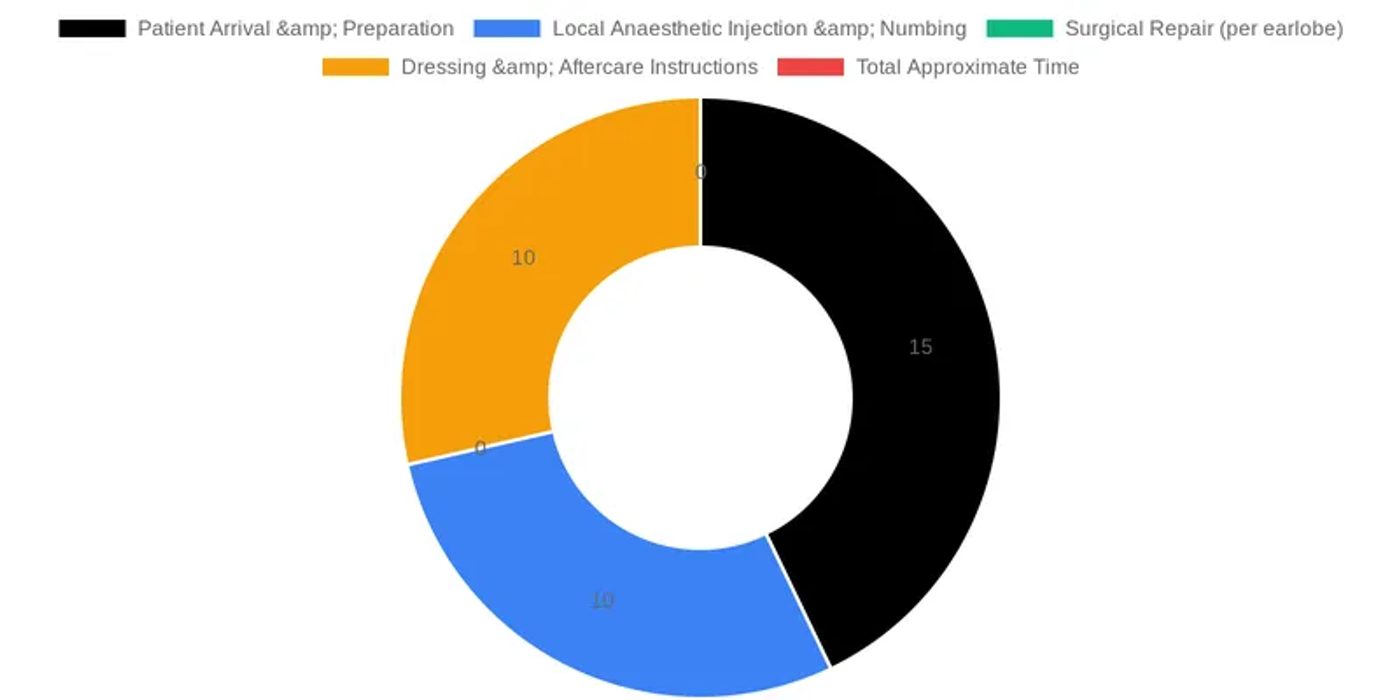
The surgical repair is a minor procedure performed in a clinical setting under a local anaesthetic, which numbs the earlobe to prevent pain. The surgeon excises the scarred tissue and closes the wound with fine sutures. Precision is used to minimize scarring and ensure a symmetrical, natural result. The procedure is quick, and patients return home the same day.
Recovery, Results, and Re-Piercing After Earlobe Repair
Post-operative care is essential for healing and the best aesthetic outcome. Recovery is generally quick with minimal discomfort.
Post-Operative Care and Healing Timeline
A small dressing may be applied after the procedure. Care instructions include keeping the area clean and dry and applying a prescribed antibiotic ointment. Mild discomfort is managed with standard pain relief.
Sutures are removed 7 to 10 days post-surgery. The scar matures and fades over several months. Protect the healing earlobe from trauma and sun exposure. Your surgeon can discuss options for scar revision and correction if scarring is a concern.
Achieving Natural Aesthetics and Safe Re-Piercing
The final result is a smooth, naturally contoured lobe with a discreet scar. The tissue must fully heal and regain strength before re-piercing.
Surgeons recommend waiting 3 to 6 months post-surgery. The new piercing should be placed adjacent to the scar, not through it. Piercing through scar tissue creates a weak point and increases the risk of re-splitting. Consult a professional piercer for proper placement.
Why Choose a Consultant Plastic Surgeon for Earlobe Repair?
The quality of the repair significantly impacts the final appearance. A board-certified consultant plastic surgeon ensures skill, precision, and safety.
Mr. Vijayan's Expertise in Facial Aesthetics & Reconstruction
A surgeon's credentials indicate their expertise. Mr. Roshan Vijayan is a Fellow of the Royal College of Surgeons, FRCS(Plast), and holds a substantive NHS Consultant Plastic Surgeon post. This training, recognized by institutions like the Royal College of Surgeons of England, signifies an understanding of anatomy, tissue handling, and aesthetic principles. His experience in complex facial reconstruction informs his approach to procedures like earlobe correction, ensuring technically sound and aesthetically balanced results. This expertise is central to achieving outcomes in all forms of surgical facial enhancement.
Ensuring Safety and Excellence in Your Procedure
A consultant-led practice prioritizes patient safety and comprehensive care. This includes a detailed consultation, safe surgical techniques, and post-operative follow-up. Selecting a specialist plastic surgeon minimizes risks like infection, poor scarring, or a "notched" appearance. The goal is a lasting solution that restores confidence.
Considering Earlobe Repair in London or Hertfordshire?
Surgery for a split, torn, or stretched earlobe provides a permanent, aesthetic result. A consultation provides a personalised assessment and a clear plan.
Book Your Consultation Today
To discuss earlobe correction surgery with Mr. Roshan Vijayan, contact us to schedule a consultation in Hertfordshire or London. Book your skin procedure today.
Conclusion
Split earlobe correction is an effective procedure that restores function and form. Surgical techniques like direct closure or Z-plasty repair the damage, create a natural contour, and minimize scarring. The procedure is performed under local anaesthetic with a quick recovery. Choosing a board-certified consultant plastic surgeon ensures safety, care, and a result that allows you to wear earrings again. A consultation is the best way to explore your options.
Frequently Asked Questions
What surgical techniques are used for split earlobe repair?
Mr. Vijayan uses precise techniques like direct linear closure or a Z-plasty flap for split earlobe repair. The best method depends on the specific tear's nature and the desired earlobe shape. The procedure involves removing the healed skin within the tear and meticulously suturing the fresh edges to restore a smooth, natural contour.
Is the split earlobe repair procedure painful?
The procedure is performed comfortably under a local anaesthetic, which numbs the earlobe completely, so you will not feel pain during the surgery. Any mild discomfort experienced afterwards is typically minimal and easily managed with standard over-the-counter pain relief. This approach ensures a safe and comfortable experience.
How long is the recovery after earlobe correction surgery?
Recovery from earlobe correction surgery is generally quick. The fine stitches are typically removed after about one week, and most initial healing is complete within a few weeks. Mr. Vijayan provides detailed after-care instructions to ensure the best possible outcome and support a smooth healing process.
Will I have a noticeable scar after the earlobe is corrected?
As a specialist plastic surgeon, Mr. Vijayan prioritises minimal scarring by using meticulous techniques and very fine sutures. The resulting scar is a thin line that is strategically placed to be as discreet as possible. Over time, this scar typically fades significantly, becoming very inconspicuous for most patients.
When can I re-pierce my ear after the procedure?
It is essential to allow the earlobe to heal completely to ensure its new strength and structure. We generally recommend waiting at least 6 to 8 weeks after your procedure before considering re-piercing. The new piercing should be placed adjacent to the scar, not directly through it, to prevent re-tearing.
How can I book a consultation for split earlobe repair in Hertfordshire?
To begin the process, you can schedule a consultation with Mr. Vijayan to discuss your goals for split earlobe repair. During this meeting, he will assess your earlobe and recommend the most suitable surgical approach for you. You can book your skin procedure directly through the website to arrange an appointment.