Expert mole and lipoma removal combines medical necessity with aesthetic precision, ensuring safe excision with minimal scarring. This guide details the removal process by a specialist plastic surgeon, covering techniques for patient safety and optimal cosmetic outcomes from diagnosis to aftercare.
Mole and Lipoma Removal: Safe Excision With Aesthetic Precision
Mole and lipoma removal by a plastic surgeon ensures both medical safety and superior cosmetic results. This article details the process of expertly excising benign skin growths, addressing concerns from initial diagnosis through to comprehensive aftercare. Readers will understand the importance of plastic surgeon expertise for achieving minimal scarring and optimal aesthetic outcomes, especially for visible lesions. The guide covers surgical excision techniques, local anaesthetic use, and the critical role of histology analysis for safe mole and lipoma removal. Mr. Roshan Vijayan, a Consultant Plastic Surgeon, brings extensive experience in reconstructive and aesthetic surgery to every procedure. His FRCS(Plast) qualification and NHS consultant background ensure patients receive care grounded in safe, tried-and-tested surgical techniques for natural, well-proportioned aesthetic outcomes. To explore your options, contact us to schedule your consultation. You can also reach us via: Book your skin procedure Expert mole and lipoma removal combines medical necessity with aesthetic precision to safely excise skin lesions with minimal scarring. Moles and lipomas are typically benign growths, removed for cosmetic reasons, physical discomfort, or to investigate suspicious changes. This guide details the removal process by a specialist plastic surgeon, focusing on techniques for patient safety and cosmetic outcomes from diagnosis to aftercare.
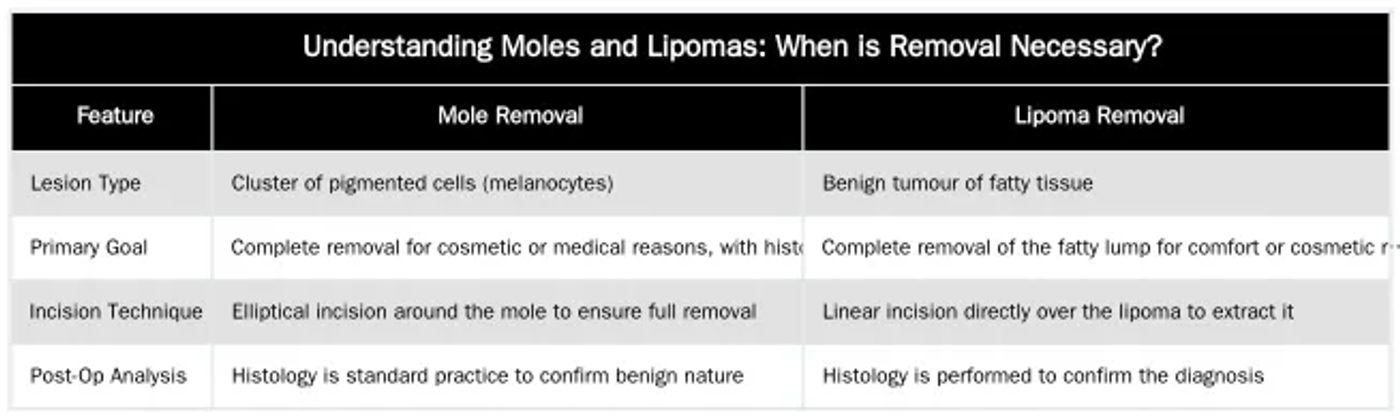
Understanding Moles and Lipomas: When is Removal Necessary?
The decision to remove a mole or lipoma is driven by cosmetic preference, physical discomfort, or medical concern over changes in a lesion's appearance. A plastic surgeon assesses the lesion to determine the best course of action, aligning the procedure with patient safety and aesthetic goals.
What are Moles and Lipomas?
Moles (naevi) are skin growths where pigment-producing cells (melanocytes) grow in clusters. Most are harmless, but any change in size, shape, colour, or texture warrants professional evaluation. Lipomas are benign tumours of fatty tissue. They feel soft and rubbery just beneath the skin. A lipoma can become painful if it grows and presses on nerves, or it can be removed for cosmetic reasons. Reasons for removal vary. A mole on the face can cause self-consciousness, while a lipoma on the back or shoulder can cause discomfort with clothing or bags. A consultation is the first step. For more information, see this guide to skin lesion removal.
Why Choose a Plastic Surgeon for Skin Lesion Removal?
A plastic surgeon offers advantages beyond simple excision. Their training in skin anatomy, tissue handling, and wound closure techniques is critical for optimal cosmetic results with minimal scarring.
The Dual Focus: Medical Excision & Aesthetic Excellence
A plastic surgeon's approach is twofold: safe medical removal of the lesion and preserving the area's aesthetic appearance. This is important for lesions in visible areas like the face, neck, or hands. The surgeon plans the incision, often placing it within natural skin creases (Langer's lines) to make the scar less conspicuous. This aesthetic focus is a core component of specialised mole removal procedures for natural-looking results.
Mr. Vijayan's Expertise in Skin Lesion Excision
Mr. Roshan Vijayan is a GMC-registered Consultant Plastic Surgeon with the Fellowship of the Royal College of Surgeons, FRCS(Plast). His training in London hospitals and his NHS consultant post provide a deep understanding of reconstructive and aesthetic surgery. This background ensures patients in Hertfordshire and London receive care using safe surgical techniques for natural aesthetic outcomes.
The Surgical Excision Process: What to Expect
Mole and lipoma removal is a structured process for patient safety and clarity. Each step is managed by the surgical team. The procedure is typically performed in an outpatient setting, allowing patients to return home the same day.
Consultation, Diagnosis, and Planning
The process begins with a consultation where the lesion is examined. For moles, this involves dermatoscopy, using a magnifying lens to view pigment structures within the skin to assess if it is benign. A lipoma diagnosis is made by a physical examination of its soft, mobile feel. A surgical plan is developed, outlining the removal technique and expected outcome.
The Procedure: Local Anaesthetic and Meticulous Closure
Surgical excision is performed under a local anaesthetic, which numbs the area while the patient remains awake. The surgeon makes an incision, removes the lesion, and performs the wound closure. Using fine sutures and a layered closing technique, skin edges are brought together with minimal tension to reduce scarring. The procedure for a single lesion takes 30-45 minutes. You can learn more about the specifics of lipoma removal here.
Ensuring Safety and Superior Aesthetic Outcomes
Patient safety and cosmetic results are the guiding principles for a plastic surgeon. This involves technical skill and post-operative protocols to support healing.
The Importance of Histology Analysis
Histology analysis is a crucial step. After excision, the lesion is sent to a lab where a pathologist examines the tissue under a microscope. This analysis confirms the diagnosis, verifying a mole is benign or a lump is a lipoma. This safety measure rules out underlying health concerns. The NHS advises checking moles for changes; histology provides confirmation after removal.
Advanced Techniques for Minimal Scarring
A plastic surgeon's training focuses on techniques for refined scars. Key methods include:
- Layered Wound Closure: The deeper layers of the skin are closed with dissolvable sutures to reduce tension on the surface, allowing the top layer of skin to heal with a finer line.
- Precise Incision Placement: Incisions are planned to follow the natural lines and creases of the skin, making them less noticeable once healed.
- Appropriate Suture Selection: The finest possible sutures are used for the skin surface, and they are removed at the optimal time to prevent track marks.
These methods are central to skin lesion excision and repair surgery, balancing the aesthetic outcome with medical removal.
Recovery and Aftercare: Achieving Optimal Results
Recovery after mole or lipoma removal is typically straightforward, but following aftercare instructions is vital for proper healing and minimal scarring. Post-procedure care protects the wound and supports healing.
Post-Procedure Care and Healing Timeline
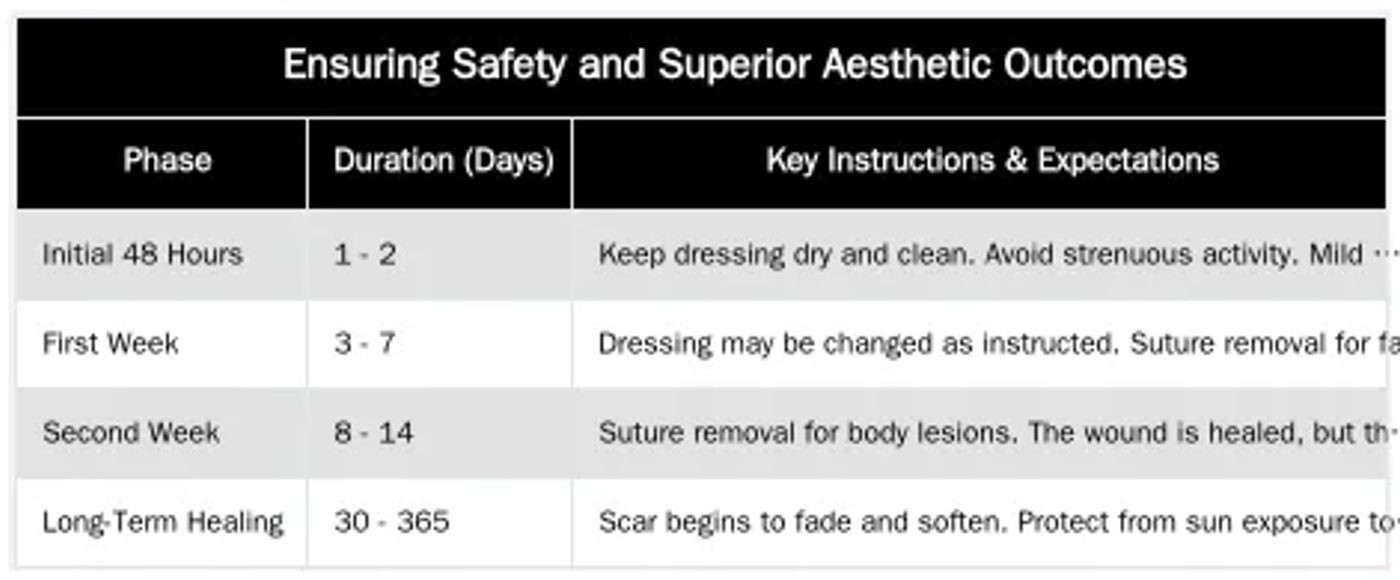
Immediately after the procedure, a sterile dressing is applied. Patients receive after-care instructions on site care, dressing changes, and signs of complications. Sutures are removed 5 to 14 days post-procedure, depending on the lesion's location and suture type. Most people resume normal activities in a day or two, but should avoid strenuous exercise to prevent tension on the wound.
Minimising Scarring During Recovery
Scar management begins once the wound has closed and sutures are removed. Protecting the scar from sun exposure for at least 12 months is critical, as UV rays can cause permanent darkening. Using a high-SPF sunscreen is recommended. A surgeon may suggest silicone gel or sheets to flatten and soften the scar. Gentle scar massage can also improve its appearance by breaking down scar tissue.
Ready for Expert Mole and Lipoma Removal?
If you are considering mole or lipoma removal, the first step is a professional consultation. An assessment provides a clear diagnosis and a treatment plan prioritising your safety and aesthetic goals. Mr. Roshan Vijayan offers specialist consultations in Hertfordshire, London, and surrounding areas to discuss options for safe skin lesion removal. To arrange your appointment, contact us. You can also Book your skin procedure to schedule your consultation.
Conclusion
Choosing a board-certified plastic surgeon for mole and lipoma removal provides assurance. The procedure includes histology analysis for safety. Specialised surgical skills in wound closure minimise scarring for natural aesthetic outcomes. This combination of safety, expertise, and aesthetic focus is the standard of care. To discuss your options, contact us. Book your skin procedure with Mr. Roshan Vijayan to receive expert care in Hertfordshire and London.
Frequently Asked Questions
Why should I choose a plastic surgeon for skin lesion removal?
A plastic surgeon possesses specialised training in both the complete excision of skin lesions and techniques that minimise scarring. They have a deep understanding of skin anatomy and tension lines, ensuring the procedure is not only medically sound but also achieves the best possible aesthetic outcome, especially in visible areas.
Is the procedure for removing moles and lipomas painful?
The procedure itself is not painful as the area is thoroughly numbed with a local anaesthetic injection. You may feel a slight initial sting from the injection, but you will not feel the excision. Any mild discomfort experienced after the anaesthetic wears off is typically manageable with over-the-counter painkillers.
Will the tissue be tested after a mole or lipoma is removed?
Yes, sending the excised tissue for histological analysis is a crucial part of the process. This laboratory testing confirms the nature of the growth, ensuring it is benign and providing complete peace of mind. It is a standard safety protocol for all skin lesion excisions performed by a consultant surgeon.
What is the recovery like after mole and lipoma removal?
Recovery is generally quick, with most patients resuming normal daily activities almost immediately. You will be given detailed aftercare instructions for your mole and lipoma removal, which may include keeping the area clean and avoiding strenuous activity for a short period. Following these guidelines is essential for optimal healing and minimal scarring.
How is a lipoma surgically removed?
A lipoma is typically removed through a straightforward surgical excision under local anaesthetic. A small incision is made in the overlying skin, and the fatty lump is carefully dissected from the surrounding tissue and removed. The incision is then meticulously closed with fine sutures to promote a neat, discreet scar.
How can I book a consultation for mole and lipoma removal in Hertfordshire?
To begin the process, you should schedule an initial consultation to assess the lesion and discuss your goals. Mr. Vijayan sees patients across Hertfordshire, including in St Albans and Welwyn. You can book your consultation for mole and lipoma removal to receive an expert evaluation and personalised treatment plan.