
Understanding pinnaplasty scars is key for patients. This guide details the healing journey, scar maturation, and strategies to optimize their final look. Learn how surgical technique, genetics, and post-operative care influence appearance for the best aesthetic result.
Pinnaplasty Scars: Understanding Healing and Minimizing Visibility
Pinnaplasty scars are a primary concern for patients, influencing the final aesthetic outcome of ear pinning surgery. This article details the typical location and appearance of pinnaplasty scars, primarily concealed behind the ear in the postauricular sulcus. It explains the comprehensive scar maturation process, from initial redness to fading over 12-18 months, and outlines effective post-operative care strategies. Understanding wound healing phases and minimizing visibility through meticulous surgical incision techniques and proper aftercare is crucial for achieving optimal, discreet results.
Mr. Roshan Vijayan, a board-certified Consultant Plastic Surgeon, emphasizes meticulous surgical techniques and detailed post-operative care to ensure minimal, well-hidden scars. His approach focuses on natural, balanced aesthetic outcomes through tried and tested methods, reflecting extensive experience in facial aesthetics and reconstructive surgery.
To explore your options, contact us to schedule your consultation. You can also reach us via: Book your skin procedure
Understanding pinnaplasty scars is a primary concern for patients, as the final aesthetic result depends on how incisions heal. These marks are designed to be inconspicuous, but their appearance is influenced by surgical technique, genetics, and post-operative care. This guide details the healing journey, scar maturation, and strategies to optimize their final look.
What Do Pinnaplasty Scars Look Like and Where Are They Located?
Pinnaplasty (otoplasty) scars are fine, linear lines placed for concealment. The incision allows access for cartilage reshaping while creating a discreet mark. It is typically made in the natural crease behind the ear (the postauricular sulcus), where the ear joins the head. This placement makes the healed scar invisible from a frontal or side view, as it blends into the skin's natural folds.
Initially, the incision line appears pink or red and may be slightly raised. Over months, it fades to a pale white or flesh tone, becoming softer and flatter. The final scar is a subtle line, difficult to detect without close inspection.
The Meticulous Incision: Minimizing Visibility
A scar's final quality depends on the surgeon's technique. Consultant Plastic Surgeon Mr. Roshan Vijayan uses methods to minimize tension on the skin closure. By placing the incision in the deepest part of the retro-auricular crease and using fine, absorbable sutures, the skin edges are brought together precisely. This approach supports optimal healing for a minimal, well-hidden scar. A planned pinnaplasty procedure considers both the ear's prominence and the scar's long-term aesthetic.
The Pinnaplasty Scar Healing Journey: What to Expect Over Time
Scar maturation occurs over many months, long after the initial wound has healed. Understanding this timeline helps set realistic expectations. The scar evolves significantly in its first year, transitioning from a noticeable mark to a subtle line. The final result is not apparent for at least 12 to 18 months.
Stages of Scar Maturation: From Redness to Fading
Wound healing occurs in distinct phases with visible characteristics. The initial phase involves inflammation and scab formation, followed by a period of collagen production that can make the scar appear red and raised. The final, longest phase is remodeling, where collagen reorganizes and the scar softens, flattens, and fades.
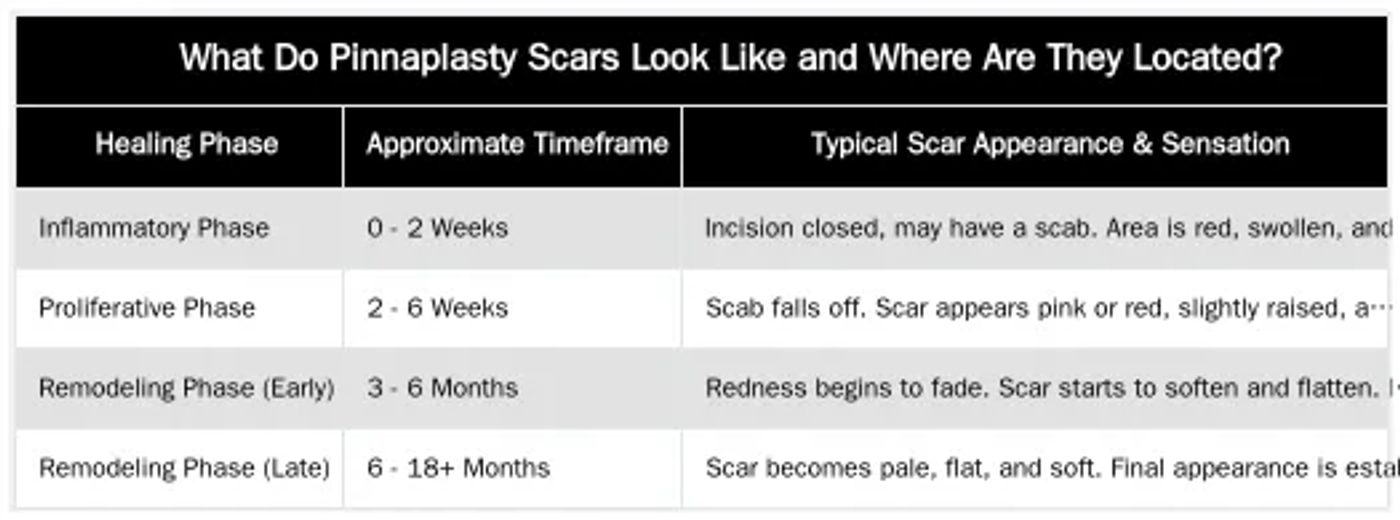
A table illustrating the typical stages and timeline for scar maturation after ear correction surgery.
How Can I Minimize My Scars for the Best Outcome?
While surgical technique is foundational, patient adherence to post-operative care is critical for the best scar outcome. Proactive management during healing influences the scar's final texture, colour, and visibility. This involves protecting the healing tissue from physical and environmental stressors.
Essential Post-Operative Care and Scar Management Techniques
Following your surgeon's aftercare plan is essential. Key strategies include:
- Sun Protection: New scar tissue is susceptible to UV radiation, which can cause permanent darkening (hyperpigmentation). Apply a high-SPF (50+) broad-spectrum sunscreen to the scar for at least 12-18 months post-surgery when outdoors.
- Silicone Treatments: Once the wound has closed (typically 2-3 weeks post-op), using silicone gel sheets or gels can be effective. Silicone hydrates the scar tissue, reducing redness and preventing it from becoming raised.
- Gentle Massage: With your surgeon's clearance, gentle scar massage can help break down firm tissue, improve flexibility, and encourage flattening. This typically starts several weeks after the procedure.
- Avoiding Tension: For the first few weeks, avoid activities that put tension on the incision. Follow instructions on headbands and sleeping positions for your prominent ear correction.
Understanding Potential Scarring: Hypertrophic Scars vs. Keloids
In a small percentage of cases, an overactive healing process leads to abnormal scar formation, primarily hypertrophic scars and keloids. While both are raised, they have distinct characteristics, and understanding the difference is key to proper management. Risk factors include genetic predisposition, skin type, and infection or excessive tension on the wound during healing.
Identifying and Managing Abnormal Scarring After Otoplasty
Hypertrophic scars are raised, red, and firm but remain within the original incision boundaries. They typically appear within the first few months of healing and may improve on their own over a year or two. Keloid scarring is more aggressive; a keloid grows beyond the original wound boundaries into surrounding healthy skin. Keloids can be itchy or painful and are less likely to resolve without intervention. According to the National Health Service (NHS), they are more common in people with darker skin and those under 30. Consult your surgeon if you notice excessive thickness, redness, or growth in your scar.
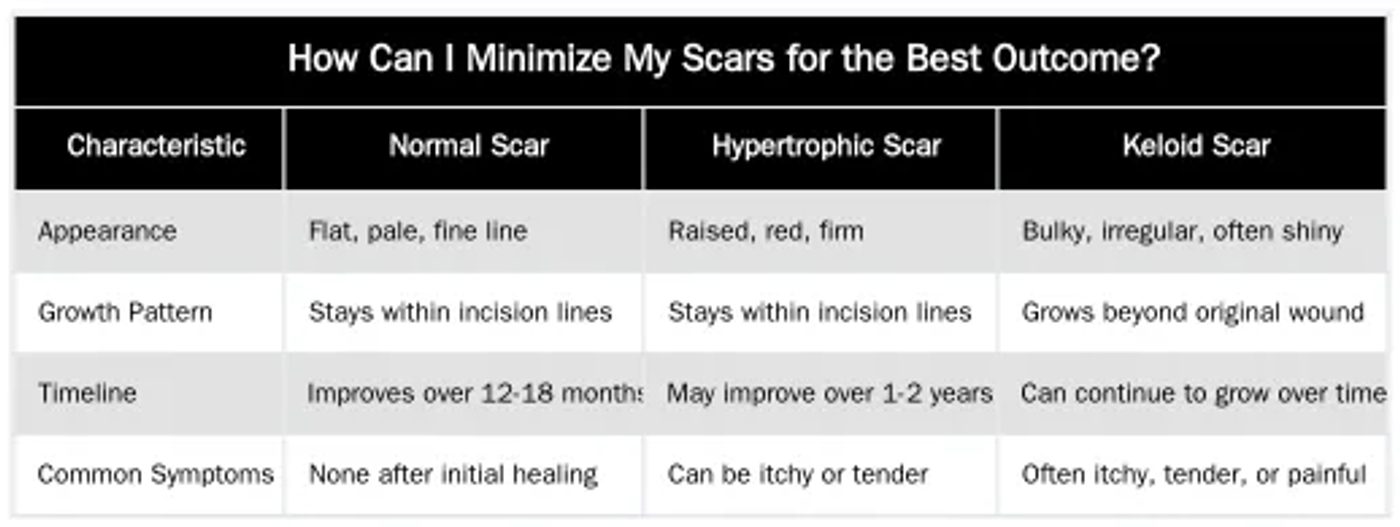
A text comparison table outlining the key differences between normal, hypertrophic, and keloid scars.
Expert Insights on Pinnaplasty Scar Revision and Long-Term Solutions
Scar revision surgery is an option for pinnaplasty scars that have healed poorly, become hypertrophic, or are aesthetically unsatisfactory. As a Fellow of the Royal College of Surgeons with experience in aesthetic and reconstructive procedures, Mr. Vijayan understands wound healing and scar biology. The goal of revision is not to erase the scar—which is impossible—but to improve its appearance by making it narrower, flatter, and less conspicuous.
Revision is typically considered only after the original scar has fully matured, usually around 12 months post-surgery. This waiting period allows the scar to soften and fade naturally, providing a stable baseline for a corrective procedure.
When to Consider Scar Revision and Mr. Vijayan's Approach
Scar revision may be considered if a scar is wide, depressed, raised (hypertrophic or keloid), or causes distortion. Mr. Vijayan’s approach to scar revision and correction is personalized. Treatment options range from non-surgical methods to surgical excision. Non-surgical options include steroid injections to flatten raised scars or laser treatments to reduce redness. Surgical revision involves excising the old scar tissue and re-closing the incision using techniques like Z-plasty to reorient the scar along natural skin lines and minimize tension. As supported by research, technique is paramount for successful outcomes in scar revision (Garg et al., 2016).
Achieving Natural Results: Your Journey to Confident Healing
The final appearance of pinnaplasty scars depends on both surgical technique and the patient's commitment to post-operative care. Most scars from ear correction heal into faint, well-hidden lines, but it is important to understand the maturation timeline and potential complications. Mr. Vijayan provides detailed aftercare to support natural aesthetic outcomes. For an assessment or to discuss your options, contact us to schedule a consultation. To consider other skin procedures, you can Book your skin procedure directly.
Frequently Asked Questions
What do pinnaplasty scars typically look like?
Pinnaplasty scars are typically very fine lines that are strategically placed in the natural crease behind the ear where it joins the head. Initially, the incision line will appear pink or red, but over several months it will fade to a pale, flat line. Mr. Vijayan’s meticulous surgical technique ensures the scar is as inconspicuous as possible, blending into the skin's natural folds.
How long does it take for pinnaplasty scars to fully mature?
The full maturation process for pinnaplasty scars can take between 12 to 18 months. During this time, the scar tissue remodels, becoming softer, flatter, and less pigmented. Following the detailed aftercare plan provided is essential to support this healing journey and achieve the best long-term result.
Will my pinnaplasty scars be noticeable to others?
Due to their careful placement in the posterior auricular sulcus (the groove behind the ear), pinnaplasty scars are naturally concealed from frontal or side views. The vast majority of patients find their scars are virtually unnoticeable to others once fully healed. The goal is always a natural aesthetic where the focus is on the improved ear shape, not the incision site.
What is the best way to care for ear surgery scars?
Following your post-operative instructions precisely is the most effective way to ensure optimal healing. This typically includes keeping the area clean, avoiding direct sun exposure which can darken scars, and applying recommended silicone-based gels or sheets. Proper care helps minimise inflammation and supports the body in creating a fine, faint scar.
Are there treatments for raised or thickened otoplasty scars?
Yes, in the rare event that a scar becomes raised, thickened, or discoloured (known as a hypertrophic or keloid scar), effective treatments are available. Depending on the specific case, options may include specialised dressings, steroid injections, or minor scar revision surgery. Mr. Vijayan provides comprehensive follow-up to monitor healing and will advise on the most appropriate course of action if needed.
How can I learn more about pinnaplasty and my expected results?
The best way to understand the procedure and the healing process is through a personal consultation. Mr. Vijayan will assess your individual anatomy, explain his surgical technique, and answer all your questions about achieving a natural-looking outcome. To discuss your goals and create a tailored surgical plan, please book your skin procedure today.