

Brachioplasty (Arm Lift)
Brachioplasty is an arm lift procedure that removes loose skin and selected fat from the upper arms. It is particularly relevant after substantial weight loss or changes in skin elasticity, when redundant tissue remains despite a stable weight and regular exercise.
- Excess, sagging skin removed from the upper arm
- Underlying tissue tightened and reshaped for a smoother contour
- Scar carefully positioned along the inner arm to minimise visibility
- Consultant-led care, with two-surgeon safety on complex cases
What our patients say

This content has been medically reviewed by Mr Roshan Vijayan (GMC Number 7020524) MBBS, BSc (Imperial College London), MRCS (Eng), FRCS (Plast), Executive MBA.
The operation is planned around arm size, shape, skin quality and the degree of excess skin to be removed. Mr Roshan Vijayan also considers symptoms, lifestyle and future plans so that the proposed outcome is practical, proportionate and surgically appropriate.
Real, natural results.
Outcomes from Mr Vijayan’s own patients, balanced, beautifully healed and entirely natural. Drag the handle on each case to reveal the journey.
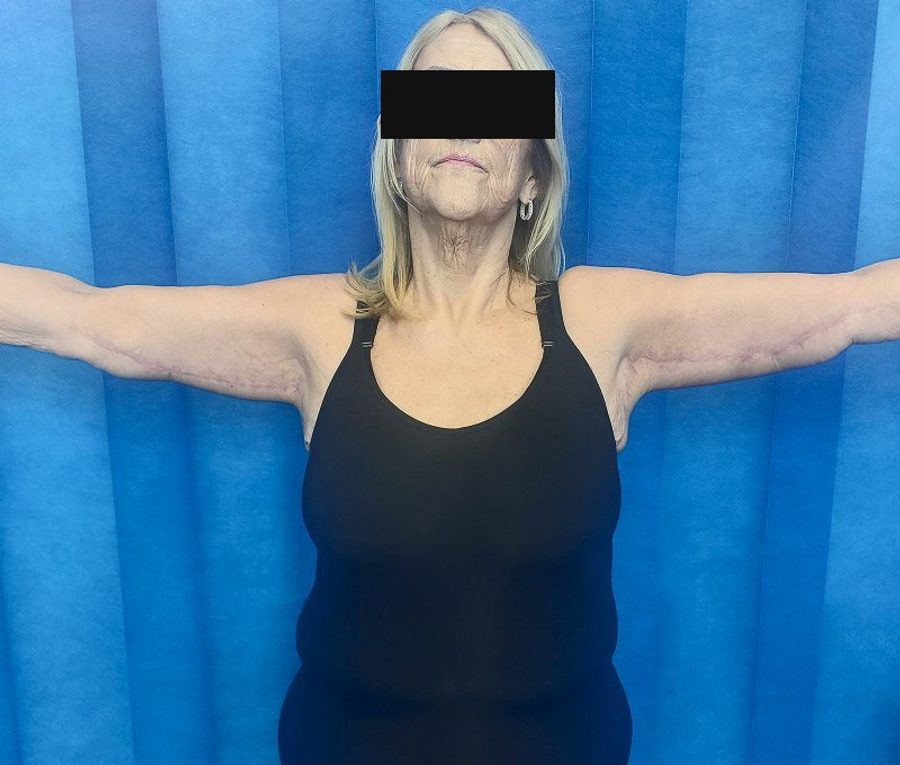
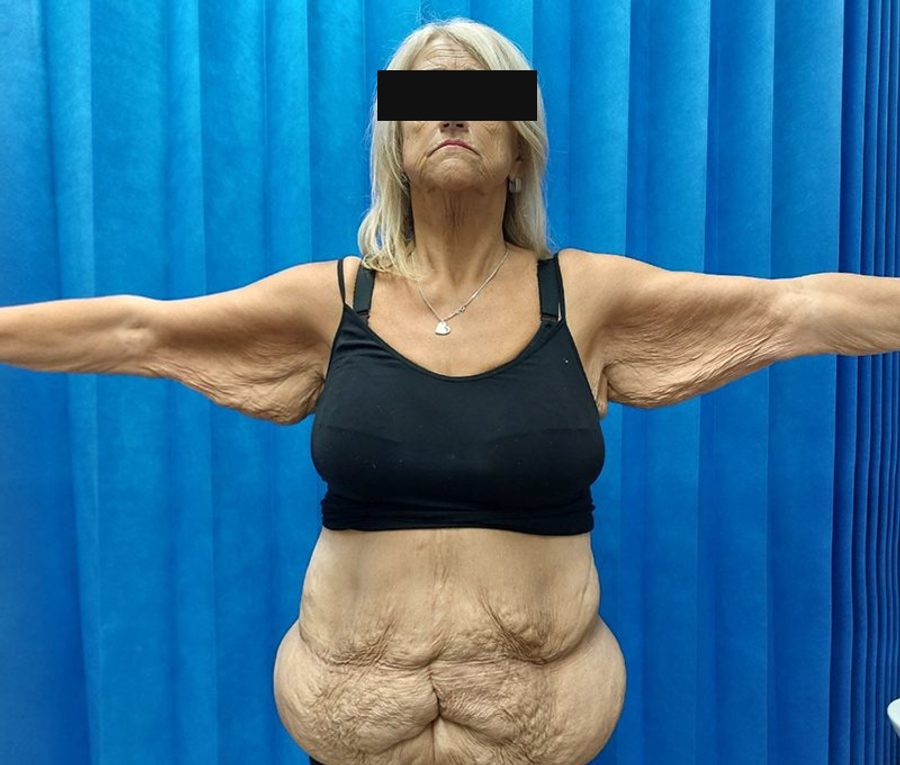 BeforeAfter
 Arm Lift
What Is Brachioplasty?
Brachioplasty, also known as arm lift surgery, removes loose skin and, where needed, excess fat from the upper arms. The incision is generally placed along the inner or back of the arm, with its length depending on how much skin needs to be removed. The remaining tissue is then tightened and reshaped to create a smoother upper arm contour.
The extent and position of the incision depend on the amount and distribution of excess skin. Mr Roshan Vijayan assesses skin laxity, fat distribution, and the proportions of the arms and upper body before explaining the appropriate surgical approach and expected scar position.
Brachioplasty (Arm Lift) at a glance
A quick snapshot of what to expect. Every plan is individual, so Mr Vijayan confirms your own timings at your consultation.
Surgery time
1.5–3 hours
Time off work
1–2 weeks
Hospital stay
0–1 nights
Showering
After 2 days
Light activity
After 1–2 weeks
Compression garment
4–6 weeks
Exercise
After 4–6 weeks
Driving
After 1–2 weeks
Full recovery
Up to 6 weeks
Final results
2–3 months
What Can Arm Lift Surgery Address?
Loose upper-arm skin can cause practical problems, as well as change the shape of the arms. Larger folds may rub against the chest, become irritated or make fitted sleeves and certain activities uncomfortable.
Brachioplasty can address:
- Hanging or redundant upper-arm skin
- Loose tissue following substantial weight loss
- Reduced skin elasticity associated with ageing
- Localised fat treated alongside skin removal
- Rubbing, irritation or discomfort caused by skin folds
- Reduced definition between the upper arm and surrounding areas
- Difficulty finding sleeves that fit comfortably
- Differences in contour between the two arms
 Benefits
Arm lift surgery removes loose tissue that cannot be corrected through exercise or weight loss alone.
Key Benefits of Brachioplasty
Exercise can strengthen and define the arm muscles, but it cannot remove skin that has permanently lost elasticity. Brachioplasty directly treats this excess tissue and reshapes the upper arm around the underlying structure.
The procedure can provide:
- Removal of loose upper-arm skin
- A smoother and firmer arm contour
- Reduction of selected fat deposits where appropriate
- Less rubbing and irritation from redundant tissue
- Better definition between the arm, shoulder and chest
- Improved comfort in fitted or sleeveless clothing
- Long-lasting results when weight remains stable
 Is It Right for You?
A compression garment supports the arms and helps manage swelling during early recovery.
Am I a Suitable Candidate for an Arm Lift?
You may be suitable for brachioplasty if you have significant upper-arm skin laxity that has not improved after reaching a stable weight. Candidates should be in good general health, understand the recovery involved and have realistic expectations about the improvement and scarring associated with surgery.
Smoking, unstable weight and medical conditions that impair circulation or healing can increase the likelihood of complications. If the main concern is a small amount of fat with good skin elasticity, liposuction may be more suitable. Where loose skin is the dominant issue, liposuction alone can make the laxity more apparent.
What Does Brachioplasty Surgery Involve?
Arm lift surgery is performed under general anaesthesia and generally takes between one and three hours. Mr Vijayan marks the planned skin removal before surgery, taking care to position the incision along the inner or back of the arm where the anatomy allows.
| Approach | Scar Length | Typical Candidate |
|---|---|---|
| Mini or short-scar brachioplasty | Confined to the armpit area | Mild to moderate skin laxity, limited to the upper portion of the arm |
| Standard brachioplasty | Extends partway down the inner or back of the arm | Moderate laxity extending beyond the upper arm |
| Extended/full-length brachioplasty | Extends from the armpit towards the elbow | More significant skin laxity, often following substantial weight loss |
The approach recommended depends on the amount and distribution of excess skin.
Excess skin and fat are removed, and the underlying supportive tissue is tightened to improve the arm contour. Liposuction can be incorporated when selected fatty areas require further refinement. Once the arms have been checked for balance, the incisions are closed, and compression garments are applied.
Your Arm Lift Treatment Journey
Planning takes account of the amount and distribution of loose skin, the surrounding contours and the incision needed to achieve the intended correction. These details are explained in advance so that you have a clear understanding of the procedure and recovery.
Your Brachioplasty Consultation
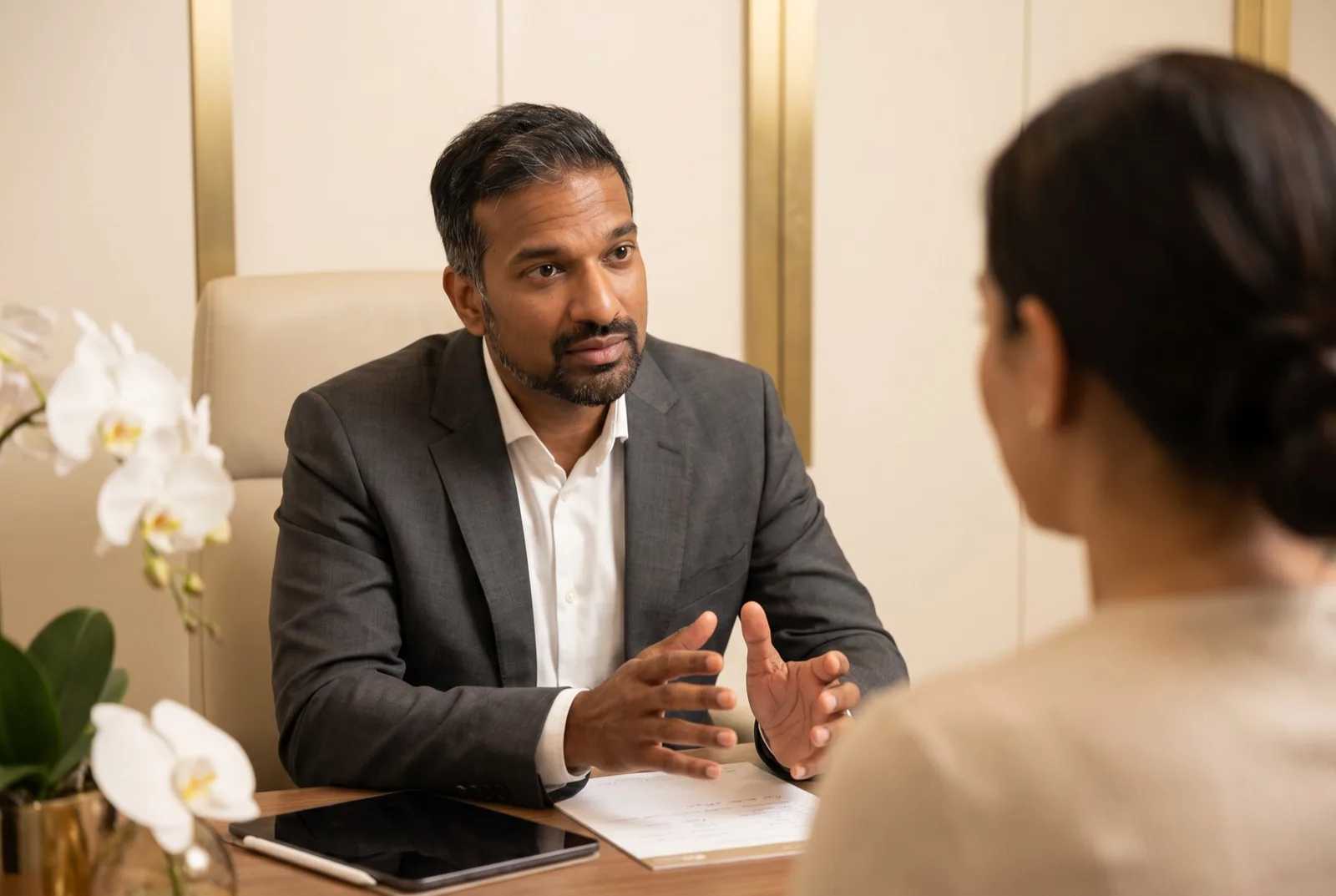
Mr Vijayan will examine the upper arms with them resting and raised, assessing skin elasticity, fat distribution, previous weight change and any differences between the two sides. He will explain the recommended incision position, whether liposuction is required and what can realistically be achieved. Clinical photographs and a written summary support the plan, followed by the opportunity for a second consultation.
The Arm Lift Procedure
Under general anaesthesia, incisions are made according to the markings agreed during planning. Mr Vijayan removes the measured amount of redundant skin and fat, tightens the supportive tissue and refines the contour of each arm. The wounds are closed carefully before dressings, and a compression garment is applied.
Brachioplasty Recovery and Aftercare
Swelling, bruising, tightness and temporary changes in sensation are expected during early recovery. Many people return to light work after one to two weeks, but lifting, vigorous exercise and activities that place tension across the incisions must be avoided for approximately four to six weeks. Follow-up appointments monitor wound healing, swelling, arm movement and scar development.
Arm Lift Results
The reduction in loose skin is visible after surgery, although swelling temporarily affects the final contour. The arms continue to settle over the following weeks and months, while the scars gradually soften and become less noticeable. Maintaining a stable weight supports the longevity of the result.
Recovery and Aftercare
The recovery process from a brachioplasty can take several weeks. Patients are generally advised to avoid strenuous activities for 4 to 6 weeks and wear a supportive garment to aid healing and reduce swelling. Discomfort, swelling and bruising are common in the initial recovery period and will gradually subside.
The first few days
You will be supported in a compression garment. Discomfort, swelling and bruising are normal and are managed with prescribed medication. Keeping the surgical site clean matters from the outset.
Week one to two
Most patients return to light activities after around two weeks. Gentle movement little and often is encouraged, while anything strenuous is avoided.
Weeks three to six
The compression garment continues to support healing and reduce swelling. Strenuous activity and heavy lifting are avoided for four to six weeks.
Six weeks onward
Most normal activity, including exercise, is comfortably resumed. Swelling continues to settle and the arm contour refines.
Three to six months
Full results appear as the body heals and swelling reduces. Scars soften and fade, and follow-up appointments continue for as long as you need them.
Possible Risks and Complications
As with any operation, brachioplasty carries risks that need to be considered alongside the expected improvement. Mr Vijayan will explain the possible complications during consultation and discuss how your health, skin quality and proposed extent of surgery influence them.
Risks associated with brachioplasty include:
- Bleeding, infection or fluid collection (seroma)
- Delayed or separated wound healing
- Prominent, widened or raised scars
- Changes in sensation, including possible injury to a sensory nerve in the upper arm, or persistent swelling
- Asymmetry or contour irregularity
- Blood clots or complications associated with anaesthesia
Your safety is paramount. Consultant-led aftercare, a day-one call and unlimited follow-up mean any concern is seen and addressed by Mr Vijayan personally.
Why Choose Mr Roshan Vijayan for Brachioplasty?
Mr Vijayan has a particular interest in reconstructive and aesthetic body contouring after substantial weight loss. His planning considers the amount of tissue requiring removal, incision position, wound tension and the natural proportions of the arms and upper body.
His approach includes:
Individual assessment of skin, fat and arm proportions
Clear guidance about incision placement and the likely improvement
Surgical planning informed by experience in post-weight-loss body contouring
Honest advice on whether liposuction or further weight stability would be preferable
A second consultation before surgery
Consultant-led postoperative reviews and accessible aftercare

Meet Mr Roshan Vijayan
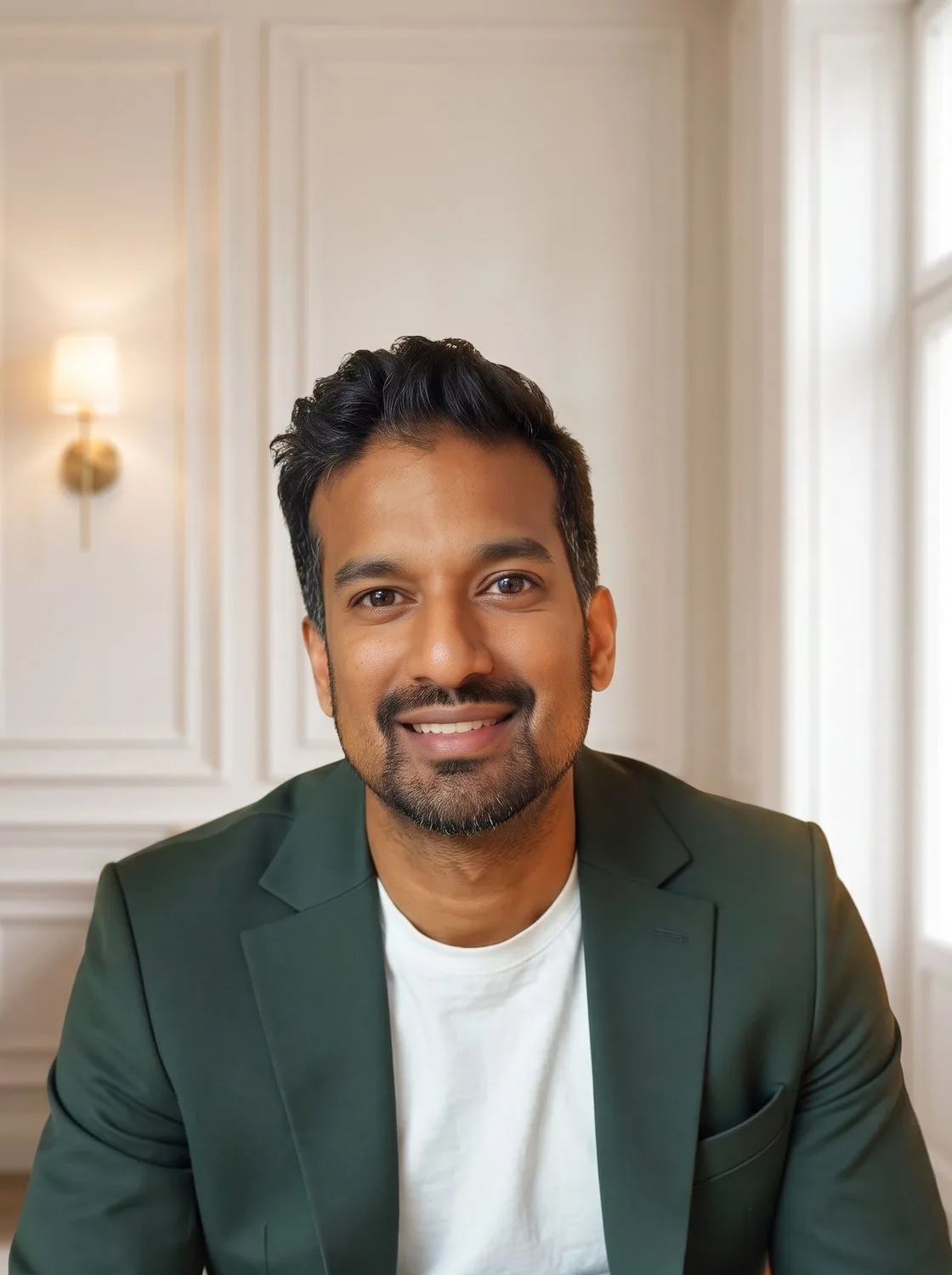
Mr Roshan Vijayan is an NHS Consultant Plastic Surgeon with the specialist FRCS(Plast) qualification and full GMC registration. Since qualifying from Imperial College London, he has trained across several prominent plastic surgery units and developed broad experience in reconstructive, aesthetic and body-contouring surgery.
Post-weight-loss body contouring is a particular area of interest within his private practice. His brachioplasty planning considers skin laxity, arm proportions, incision placement and recovery together, supported by detailed consultations and consultant-led follow-up care.
How Much Does Brachioplasty Cost?
Brachioplasty costs depend on the extent of skin removal, whether liposuction is included and the hospital and anaesthetic requirements. After assessing your arms and agreeing on the proposed approach, Mr Vijayan will arrange a detailed quotation so you can consider the full cost before scheduling surgery.
Every procedure is planned individually. Once Mr Vijayan has assessed you and agreed a surgical plan, you will receive a complete written quotation covering the relevant surgical, hospital and anaesthetic costs.
Your exact, all-inclusive quote is confirmed in writing after your consultation, with no hidden costs.
Your fee includes
- Your consultation with Mr Vijayan
- A second consultation, included
- Surgeon’s and anaesthetist’s fees
- Hospital and theatre fees
- All follow-up and aftercare
- A personal day-one call
Frequently Asked Questions
Where are arm lift scars placed?
Brachioplasty scars are generally positioned along the inner or back of the upper arm, extending towards the elbow when a larger amount of skin must be removed. The scar is permanent, although it generally becomes softer and lighter as it matures.
Can exercise tighten loose upper-arm skin?
Exercise can strengthen and define the upper-arm muscles, but it cannot remove significant excess skin that has lost elasticity. Where redundant skin remains after weight loss or exercise, brachioplasty is the surgical procedure used to remove it.
What is the difference between an arm lift and arm liposuction?
Liposuction removes fat through small incisions but depends on the skin contracting around the reduced volume. An arm lift removes loose skin and can incorporate liposuction when excess fat and skin are present together.
When should I consider an arm lift after major weight loss?
Brachioplasty is best considered once your weight has remained stable for an appropriate period. This allows the full extent of the loose skin to be assessed and reduces the likelihood that further weight loss will alter the surgical result.
Can men have brachioplasty?
Yes, brachioplasty is suitable for both men and women with significant upper-arm skin laxity. The pattern of skin removal and intended contour are adapted to the individual anatomy.
Is brachioplasty available on the NHS?
NHS arm lift surgery is limited and is generally considered only when redundant skin causes significant functional or medical problems. Local eligibility criteria differ, and cosmetic concerns alone do not normally qualify for funded treatment.
What is brachioplasty recovery like?
Swelling, bruising, tightness and temporary numbness are expected during the early stages of recovery. Light activities can resume gradually, but lifting and strenuous upper-body exercise should be avoided for approximately four to six weeks.
How should I sleep after arm lift surgery?
Sleeping on your back with your arms supported on pillows can help reduce swelling and avoid pressure on the incisions. Side sleeping should be delayed until it is comfortable and no longer places tension on the healing arms.
Are arm lift results permanent?
Brachioplasty results can remain stable for many years when body weight is maintained. The arms will continue to change with ageing, and substantial weight fluctuation can affect the remaining skin and overall contour.
Can an arm lift be combined with other body-contouring surgery?
Brachioplasty can sometimes be combined with another procedure, particularly when several areas have been affected by major weight loss. The total operating time, recovery requirements and individual health must be assessed before combined surgery is recommended.
Book Your Brachioplasty Consultation
If loose upper-arm skin remains after substantial weight loss or changes in skin elasticity, an individual assessment can establish whether brachioplasty is suitable. Mr Vijayan will examine the distribution of skin and fat, explain the proposed surgical approach and discuss the expected recovery and change in arm contour. Please contact us to arrange your consultation.
Request a Consultation