
This guide to re-piercing ears after surgery for a split earlobe details waiting periods, piercing placement safety, and aftercare. Informed by Consultant Plastic Surgeon Mr. Roshan Vijayan, it covers the healing process, selecting a piercer, and choosing jewellery to maintain long-term earlobe health.
Re-pierce Ears After Surgery: Safe Earlobe Piercing After Repair
You can re-pierce ears after surgery for a split earlobe, but careful timing and adherence to post-operative care are crucial. This guide explains the optimal waiting period, typically 3 to 6 months, allowing for complete earlobe healing and scar tissue maturation. Understanding the recovery process ensures the repaired lobe is strong enough to support a new piercing. Key considerations include selecting a professional piercer, choosing the correct piercing placement away from the original suture line, and diligent aftercare to minimise infection risk and ensure long-term earlobe health.
Mr. Roshan Vijayan, a Consultant Plastic Surgeon, provides expert guidance on safely re-piercing after earlobe repair. His advice emphasizes understanding earlobe healing and scar tissue maturation to achieve optimal aesthetic and functional outcomes, ensuring patient safety and long-term earlobe integrity.
To explore your options, contact us to schedule your consultation. You can also reach us via: Book your skin procedure
This guide to re-piercing ears after surgery for a split earlobe details waiting periods, piercing placement safety, and aftercare. Informed by Consultant Plastic Surgeon Mr. Roshan Vijayan, it covers the healing process, selecting a piercer, and choosing jewellery to maintain long-term earlobe health.
Can You Re-Pierce Your Ears After Split Earlobe Repair Surgery?
Yes, you can re-pierce your ears after a split earlobe repair, but timing is critical. Wait until the earlobe has healed and the scar tissue has matured. This ensures the repaired lobe is strong enough to support an earring without re-splitting.
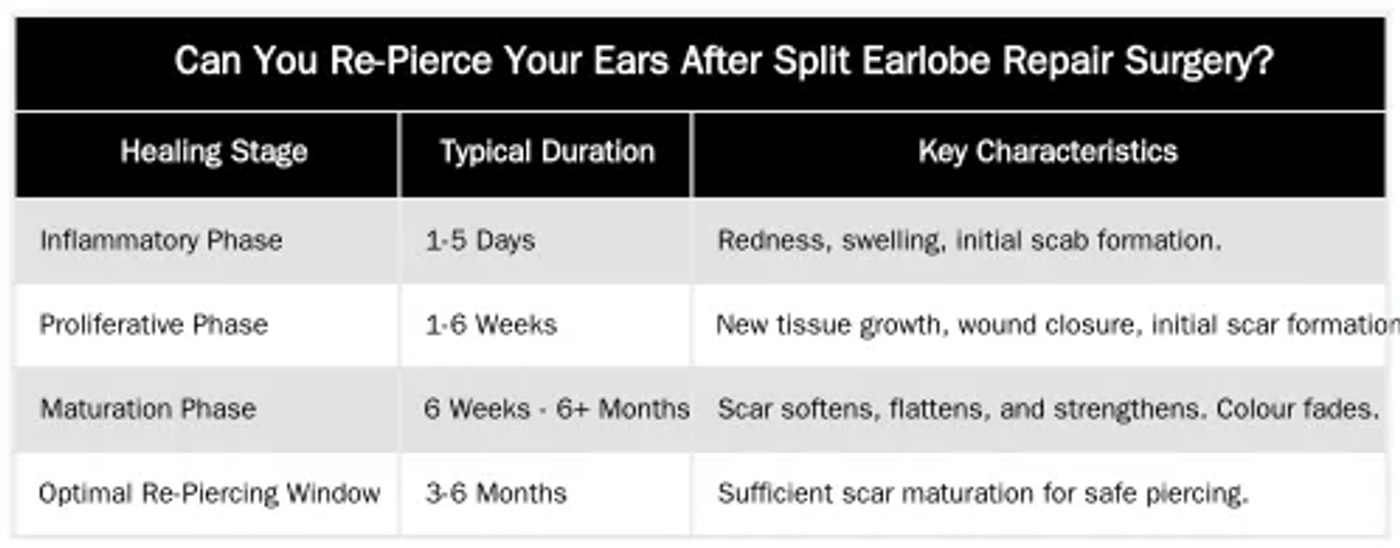
The minimum recommended waiting period is 6 to 8 weeks, but surgeons like Mr. Vijayan often advise waiting 3 to 6 months. This allows internal tissues to strengthen and the scar to soften, reducing complication risks. Piercing too soon can compromise the repair, cause poor healing, and increase infection or scarring risks. A follow-up consultation with your surgeon is the best way to assess readiness for a new piercing.
Understanding Earlobe Healing and Scar Tissue Maturation
After a split earlobe repair, the body's wound healing process involves deep tissue reconstruction, not just surface skin closure. Initially, a clot forms and new skin cells cover the wound. Beneath the surface, collagen fibres create scar tissue, strengthening the repaired area. The expert techniques for split earlobe repair highlight why this healing phase is vital.
Scar tissue matures over several months. Initially, the scar is red, raised, and weak. It remodels over time, becoming flatter, paler, and stronger. Piercing before maturation stresses immature scar tissue, which is susceptible to tearing. Allowing adequate time ensures the new tissue provides a stable foundation for a piercing.
The Stages of Post-Surgical Earlobe Recovery
Earlobe surgery recovery has three phases. The inflammatory phase lasts a few days. The proliferative phase, where new tissue and blood vessels form, lasts several weeks. The final maturation or remodelling phase can last from six months to over a year, as the collagen network reorganises to maximise tensile strength.
How to Safely Re-Pierce Your Ears: Placement, Piercer, and Jewelry
Once your surgeon confirms the earlobe is healed, safe re-piercing depends on correct placement, a qualified professional piercer, and the right initial jewellery.
It is strongly advised not to pierce directly through the suture line or scar tissue. Scar tissue has a different structure than normal skin and is more prone to complications. Place the new piercing in healthy, virgin tissue adjacent to the scar—slightly above, below, or to the side. This distributes the earring's weight away from the repaired zone, reducing the risk of a re-split.
Choosing the Right Piercing Placement and Professional
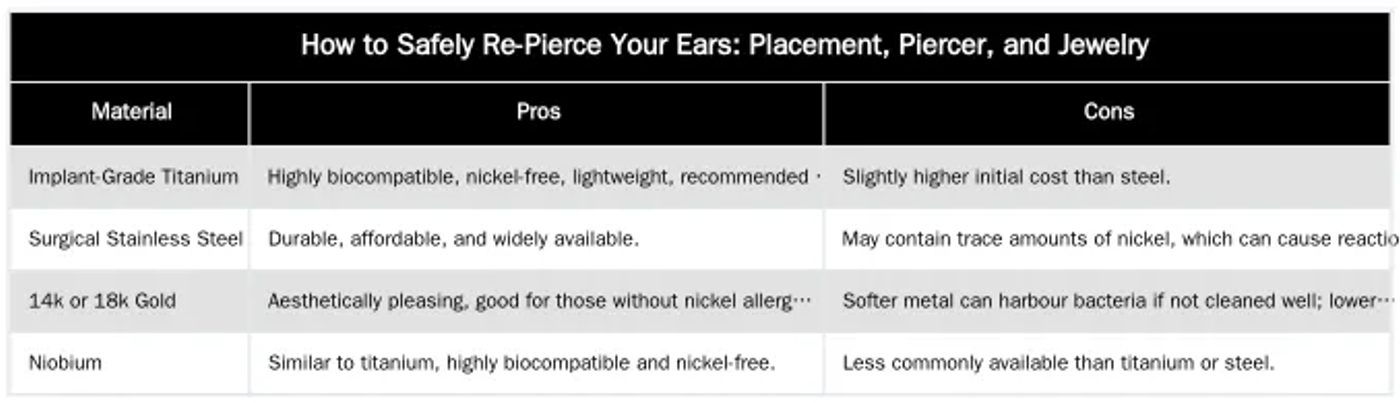
Choose a reputable, experienced professional piercer who works in a sterile environment and has experience with surgically repaired tissue. They should assess your earlobe and recommend the safest placement. Ask about their sterilisation techniques (they should use an autoclave) and see their portfolio. A professional uses a sterile, single-use needle, which is less traumatic than a piercing gun. Choose hypoallergenic earrings to prevent allergic reactions and inflammation that can complicate healing.
Mr. Vijayan's Expert Advice: Minimizing Risks and Ensuring Optimal Outcomes
Mr. Roshan Vijayan emphasizes a cautious approach to prevent future damage after a repair. The main risks of re-piercing a repaired earlobe include infection, keloid or hypertrophic scar formation, allergic reactions, and re-splitting the lobe.
Infection risk is mitigated by choosing a sterile piercing environment and following post-operative care instructions. Keloid scarring, a type of raised scar, is a risk for genetically predisposed individuals. Discuss any history of keloids with your surgeon before piercing. Earring material is critical; a nickel allergy can cause chronic inflammation that weakens the tissue. For details on the surgery, review Mr. Vijayan's split ear lobe correction procedures.
Recognizing and Preventing Potential Complications
Prevention starts with following the recommended healing time and choosing the correct piercing location. After piercing, watch for signs of trouble: persistent redness or swelling that worsens after 48 hours, yellow or green discharge, excessive pain, or a fever. Seek prompt medical advice if any of these symptoms occur.
To prevent re-splitting, avoid heavy, dangling earrings for at least 12 months after the new piercing has healed. Choose lightweight studs or small hoops for daily wear. Remove earrings before sleeping or activities where they might get caught or pulled.
Post-Piercing Care and Long-Term Earlobe Health
Post-piercing care is essential for a healthy outcome on a surgically repaired earlobe. A new lobe piercing typically heals in 6-8 weeks but may take longer on repaired tissue. Proper hygiene during this period is critical to prevent complications. Follow your piercer's instructions precisely.
A standard aftercare routine is cleaning the piercing twice daily with a sterile saline solution. Avoid harsh substances like alcohol or hydrogen peroxide, which irritate healing tissue. Do not twist or turn the jewellery, as this can introduce bacteria and disrupt the healing fistula (the tube of skin forming inside the piercing). Keep the area dry and avoid swimming in pools or natural bodies of water until fully healed.
Daily Care Routine and When to Seek Medical Attention
The daily routine is: wash hands thoroughly before touching the piercing, clean the front and back with saline solution on non-woven gauze, and pat dry with a clean paper towel. Avoid snagging the earring on hair, clothing, or telephone cords.
Contact Mr. Vijayan's practice or a healthcare professional if you notice potential issues. According to the NHS, warning signs include worsening pain, swelling, or redness; a hot feeling around the piercing; yellow, green, or foul-smelling discharge; or feeling unwell with a fever. Once healed, maintain good hygiene and avoid heavy earrings for long-term earlobe health.
Ready to Discuss Your Earlobe Health? Book a Consultation Today
Whether considering an initial repair or seeking advice on when to re-pierce, a personalised consultation provides clarity. Mr. Roshan Vijayan offers assessments and tailored advice based on your healing progress and anatomy.
To ask questions or schedule an appointment in our Hertfordshire or London clinics, contact us. For skin-related procedures, you can also Book your skin procedure directly.
Conclusion
Re-piercing ears after surgery can be done safely with patience and care. By respecting the healing time, selecting a piercing location away from the scar, choosing a qualified professional, and committing to aftercare, you can safely wear earrings again. Consulting with your surgeon is the most reliable way to ensure your earlobe is ready. For expert guidance on earlobe health or other aesthetic procedures, contact us.
Frequently Asked Questions
How long should I wait to re-pierce ears after surgery?
It is essential to allow the earlobe to fully heal and the scar tissue to mature before you re-pierce ears after surgery. Mr. Vijayan recommends waiting a minimum of 6 to 8 weeks, though waiting 3 to 6 months is often ideal for ensuring the repaired tissue is strong and stable.
Can I get a new piercing in the exact same spot as the old one?
No, you should not pierce directly through the surgical scar line. A professional piercer should place the new piercing slightly adjacent to the scar to ensure the integrity and strength of the repaired tissue. This placement avoids putting stress on the most delicate part of the repair.
What are the risks if I re-pierce ears after surgery too soon?
The primary risks of getting your ears re-pierced too early are infection and the potential for the earlobe to re-tear. Following your surgeon's recommended healing timeline and using a reputable piercer significantly minimises these risks when you re-pierce ears after surgery.
What kind of earrings are best for a new piercing after earlobe repair?
When you get your ears pierced again, it is best to start with small, lightweight studs made from a hypoallergenic material. Surgical-grade steel, titanium, or 14k+ gold are excellent choices to prevent irritation and allergic reactions. Heavy or dangling earrings should be avoided until the new piercing is fully healed.
Who is qualified to re-pierce ears after surgery?
We strongly advise you to re-pierce ears after surgery with a qualified and experienced professional piercer, not a retail employee using a piercing gun. A professional can properly assess the matured scar tissue and choose the optimal, safest placement for the new hole. They will also use a sterile needle, which is crucial for a clean piercing.
How do I know if my earlobe is ready for a new piercing?
The best way to confirm your earlobe has healed sufficiently is to have it assessed by your surgeon. Mr. Vijayan can evaluate the scar tissue's strength and maturity during a follow-up appointment. To discuss your specific case or book a consultation, please contact our clinic.