
Changes in sensation after breast reduction, like numbness or tingling, are common during healing. This article explains why they occur, the science of nerve regeneration, and realistic recovery timelines. Understand what to expect for breast and nipple sensation long-term.
Sensation After Breast Reduction: Understanding Nerve Recovery
Changes in sensation after breast reduction, including numbness, tingling, and altered sensitivity, are a normal part of the healing process. This article explains why these sensory shifts occur, detailing the science of nerve regeneration and realistic recovery timelines. Patients will learn about common sensations like paresthesia and hypersensitivity, factors influencing nerve recovery, and the long-term outlook for breast and nipple sensation. Understanding the journey of nerve healing provides clarity on what to expect regarding the return of feeling and breast sensitivity after surgery.
Mr. Roshan Vijayan, a board-certified Consultant Plastic Surgeon, offers expert insights into preserving sensation during breast reduction. His approach prioritizes safe, tried, and tested surgical techniques to achieve natural, well-proportioned outcomes while managing patient expectations for nerve recovery.
To explore your options, contact us to schedule your consultation. You can also reach us via: Request a Callback
Changes in sensation after breast reduction, including numbness, tingling, and altered sensitivity, are a common part of healing. This article overviews why these changes occur, the science of nerve regeneration, and realistic recovery timelines. It covers the types of sensory experiences to expect, factors influencing nerve recovery, and the long-term outlook for breast and nipple sensation.
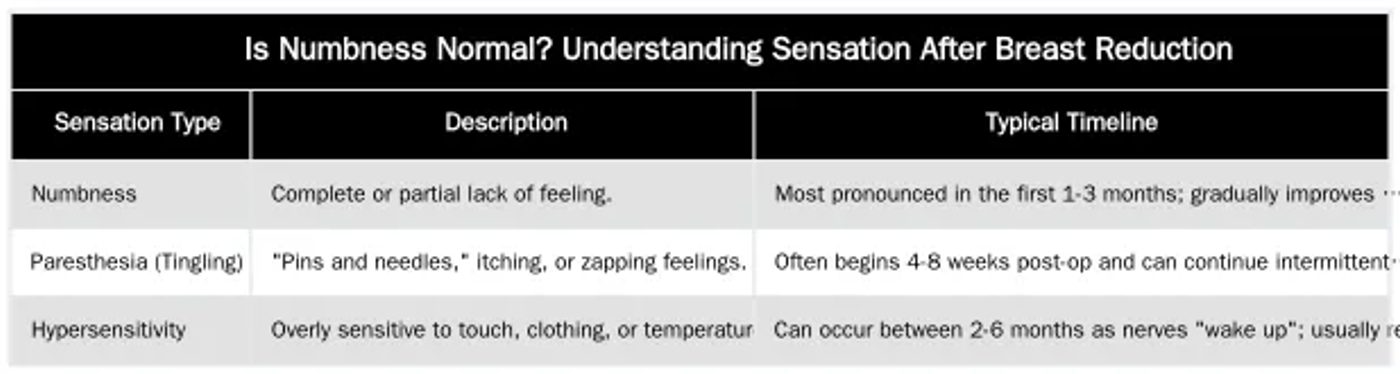
Is Numbness Normal? Understanding Sensation After Breast Reduction
Yes, numbness after a breast reduction is common and expected. During the procedure, small sensory nerves for the breast skin and nipple-areola complex are stretched or divided as tissue is removed and the breast is reshaped. This disruption causes the altered sensation patients experience.
Numbness is the most frequently reported change, but recovery involves a spectrum of sensory experiences as nerves heal and regenerate.
Common Sensory Experiences Post-Surgery
Sensations often evolve as healing progresses:
- Numbness (Anesthesia): A complete or partial lack of feeling, most commonly affecting the lower part of the breast and the nipple-areola complex.
- Reduced Sensitivity (Hypoesthesia): The breast or nipple may feel dull or less responsive to touch, temperature, or pressure.
- Tingling or "Pins and Needles" (Paresthesia): This sensation often signals that nerves are "waking up" and regenerating. It can feel like a mild electrical current or itching.
- Increased Sensitivity (Hypersensitivity): As nerves heal, they can become temporarily overactive, making light touch feel uncomfortable or painful. This typically subsides over time.
How Do Nerves Heal? The Science of Post-Surgery Sensation
The return of feeling is due to nerve regeneration. The breast skin is supplied by a network of tiny sensory nerves originating from larger nerve bundles in the chest wall. During a reduction mammoplasty, these delicate nerves can be stretched, bruised, or cut.
An injured nerve that is not completely severed can often repair itself. If a nerve is cut, healing is more complex. The nerve fibre disconnected from the nerve cell body degenerates, and a new fibre must grow from the remaining stump. This process is axonal regeneration.
The Journey of Nerve Regeneration
Nerve regeneration is a slow process. New nerve fibres grow at approximately 1 millimetre per day. They must navigate through healing scar tissue to reconnect with sensory receptors in the skin and nipple. This is why nerve recovery takes months or years, not days or weeks.
As connections are re-established, the brain interprets new signals as tingling, itching, or shooting pains. These sensations are generally positive indicators of nerve recovery. The quality of sensation may feel different initially but often improves and normalises as nerve pathways mature. The National Institute of Neurological Disorders and Stroke provides a detailed overview of this process.
Navigating Your Recovery: Common Sensations and Timelines
General timelines exist for the return of breast sensitivity, but nerve regeneration is one of the slowest healing processes. For a detailed breakdown, review a breast reduction recovery timeline.
Realistic Timelines for Sensation Return
The return of feeling is gradual and occurs in stages. Numbness is predominant initially. Over weeks and months, this may be replaced by tingling or hypersensitivity before a more normal sensation is established.
Estimated Sensation Recovery Milestones
- Recovery Phase — Approximate Timeline — Estimated Sensation Return (%)
- Initial Healing — 0-3 Months — 0-25%
- Mid-Recovery — 3-12 Months — 25-70%
- Long-Term Maturation — 1-2 Years — 70-90%
Note: Percentages are estimates and vary significantly between individuals. Full return to pre-surgical sensation is not guaranteed.
Factors Influencing Nerve Recovery
The extent and speed of nerve recovery depend on several factors:
- Surgical Technique: The method used to preserve the blood and nerve supply to the nipple (the "pedicle") is a key factor. Techniques that maintain more of this original tissue connection tend to have better sensory outcomes.
- Amount of Tissue Removed: Larger reductions, which require more extensive tissue rearrangement, may have a greater impact on sensory nerves.
- Individual Healing: Factors like age, overall health, smoking status, and genetics play a significant role in the body's ability to regenerate nerves.
- Pre-existing Conditions: Conditions that affect nerve health, such as diabetes, may impact the recovery process.
Expert Insights: Mr. Vijayan's Approach to Preserving Sensation
A surgeon's technique is central to preserving sensation. Mr. Roshan Vijayan, a consultant plastic surgeon trained at UK hospitals, uses safe, tested surgical methods to achieve natural, well-proportioned results while respecting the underlying anatomy.
Surgical Techniques and Sensory Outcomes
During a consultation for breast reduction surgery, Mr. Vijayan discusses available pedicle techniques. The choice, such as a superior or inferior pedicle, is tailored to the patient's anatomy and goals. The objective is to maintain as much nerve and blood supply to the nipple-areola complex as possible. This approach supports nerve recovery and the return of sensation post-surgery.
Patient Education and Aftercare for Optimal Healing
Setting realistic expectations is a cornerstone of Mr. Vijayan's practice. Pre-operative discussions ensure patients understand that some altered sensation is expected. This communication, aligned with guidelines from bodies like the British Association of Plastic, Reconstructive and Aesthetic Surgeons (BAPRAS), helps patients navigate their recovery.
Comprehensive aftercare instructions are also important. Following guidance on activity levels, wearing supportive garments, and attending follow-up appointments supports healing, including nerve regeneration.
Long-Term Outlook: Can Sensation Fully Return After Years?
While most improvement occurs within one to two years, nerve regeneration can continue much longer. Patients may notice subtle improvements in feeling and sensitivity several years after surgery.
Permanent Changes vs. Continued Improvement
Most patients regain substantial sensation, but some changes may be permanent. This could be a small patch of numbness, reduced overall sensitivity, or a different nipple sensation. Complete, permanent loss of all sensation is uncommon with modern techniques but remains a possibility to discuss with your surgeon.
While the aim is to preserve feeling, the surgery's primary purpose is to alleviate symptoms associated with overly large breasts. Most patients find the benefits outweigh any residual changes in sensation.
When to Seek Further Advice
Altered sensation is normal, but contact your surgical team for these symptoms:
- Severe, persistent, or worsening pain that is not managed by prescribed medication.
- Sudden and complete numbness in an area that previously had some feeling.
- Signs of infection, such as increasing redness, swelling, warmth, or discharge from the incisions.
These rare symptoms should be evaluated promptly. Understand the potential risks and complications. For general post-surgical guidance, the NHS provides reliable information.
Ready for a Consultation? Discuss Your Breast Reduction Journey
Navigating breast reduction details, including sensation recovery, requires expert guidance. A consultation allows for a thorough assessment of your anatomy and a discussion of your goals and concerns to understand potential outcomes for your case.
Personalized Care with Mr. Roshan Vijayan
Mr. Roshan Vijayan offers a consultant-led approach, providing expert care from your initial meeting to your final follow-up. His focus is on natural, balanced aesthetics and patient safety. To discuss your options and learn more about sensation changes after breast reduction, schedule a consultation.
Conclusion
Changes in sensation after breast reduction are a normal part of healing. While numbness and tingling are common initially, nerve regeneration is a gradual process that continues for one to two years, with many patients experiencing a significant return of feeling. Surgical technique and individual healing capacity are key factors in the outcome. If you are considering breast reduction surgery in Hertfordshire or London, a consultation is the next step. Request a Callback to begin.
Frequently Asked Questions
Is it normal to experience numbness after breast reduction surgery?
Yes, altered sensation, including numbness in the nipples and breast skin, is a very common and expected part of the recovery process. This occurs because the small sensory nerves are inevitably stretched or disrupted as breast tissue is removed and reshaped. The extent of these changes varies from patient to patient.
What is a realistic timeline for improving sensation after breast reduction?
Nerve recovery is a gradual process, and patience is key. While some patients notice feeling returning within a few months, the full process can take 6 to 18 months. Subtle improvements in sensation after breast reduction can even continue for up to two years post-surgery.
Will my sensation after breast reduction be exactly the same as before?
It is important to have realistic expectations regarding your sensation after breast reduction. While many patients regain good or even full feeling, it is unlikely to be identical to how it was before the procedure. Some areas may remain less sensitive, while others might become temporarily hypersensitive during the healing phase.
What are the 'zingers' or sharp pains I feel during recovery?
Those sharp, shooting, or tingling pains, often called 'zingers,' are a positive sign of nerve regeneration. They indicate that the sensory nerves are healing and 'waking up' as part of the recovery process. While they can be surprising, they typically signal that feeling is beginning to return to the area.
How does surgical technique influence nerve sensation after breast reduction?
The surgeon's technique is crucial for the outcome of nerve sensation after breast reduction. An experienced consultant plastic surgeon like Mr. Vijayan uses meticulous methods designed to preserve as much of the nerve supply to the nipple-areola complex as possible. This careful approach helps maximise the potential for sensory recovery.
How can I discuss my personal concerns about sensation changes with a surgeon?
The best way to understand the potential outcomes for your specific situation is through a one-on-one consultation. Mr. Vijayan can assess your anatomy and discuss the surgical techniques he would use to preserve feeling. You can request a callback to schedule a detailed discussion about your goals and concerns.