Pinnaplasty for adults differs significantly from the procedure for children, involving unique surgical, psychological, and recovery considerations. This surgery corrects ear shape or position to enhance facial balance. Understand the distinct approaches and benefits for adult patients.
Pinnaplasty for Adults: Understanding Age-specific Surgical Approaches
Pinnaplasty for adults presents distinct surgical and recovery considerations compared to the procedure for children. Adult ear cartilage is firmer, often necessitating advanced techniques like cartilage scoring to achieve lasting correction for prominent ears. Unlike children who typically receive general anaesthetic, pinnaplasty for adults frequently utilizes local anaesthetic with sedation, influencing recovery time and post-operative care. Understanding these differences in cartilage flexibility, anaesthesia, and healing is crucial for patients considering adult otoplasty.
Mr. Roshan Vijayan, a Consultant Plastic Surgeon, offers specialized pinnaplasty, employing techniques adapted to adult cartilage for natural, balanced results. His expertise ensures a tailored approach, focusing on safe, established surgical methods and comprehensive post-operative care.
To explore your options, contact us to schedule your consultation. You can also reach us via: Book your skin procedure
Pinnaplasty for adults is distinct from the procedure for children, involving different surgical, psychological, and recovery considerations. Also known as otoplasty, this surgery corrects the ear's shape, position, or proportion to address prominent ears. While the goal of a balanced facial aesthetic is shared, the approach varies significantly with patient age, from cartilage characteristics and anaesthesia to motivation and post-operative care.
What is Pinnaplasty and How Does it Differ for Adults and Children?
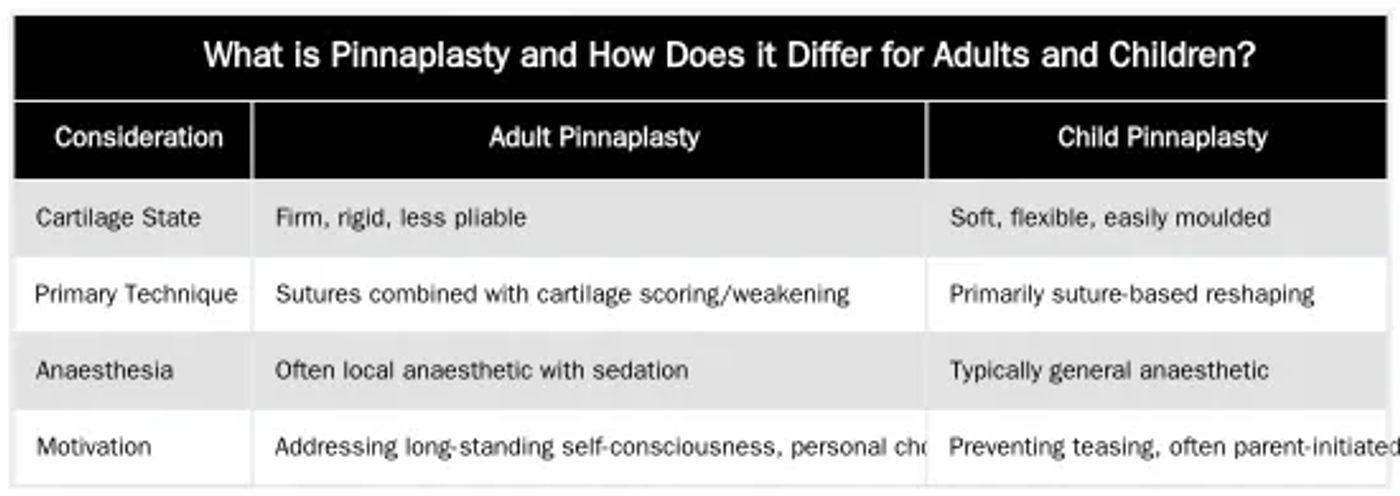
Pinnaplasty, or otoplasty, alters the appearance of the outer ear (the pinna). The primary difference between the procedure in adults and children is the physical property of the ear cartilage. In children, the cartilage is soft, pliable, and easily moulded. In adults, the cartilage is firmer and more rigid, requiring different surgical techniques to correct prominent ears.
The Role of Cartilage Flexibility in Ear Correction
Cartilage flexibility dictates the procedural differences. A child's ear cartilage, typically from age five or six, is soft enough to be reshaped primarily with sutures. The cartilage adapts to this new form as it heals.
Adult ear cartilage has a strong "memory" and resists repositioning. To overcome this, a surgeon may use advanced techniques like cartilage scoring or weakening. These controlled incisions on the cartilage surface reduce its tension, allowing it to bend more easily. This prevents the ear from gradually returning to its original prominent position. For a detailed overview, review this surgical guide to prominent ear correction.
Surgical Considerations: Anaesthesia, Techniques, and Recovery
Anaesthesia Choices: Local vs. General for Pinnaplasty
Anaesthesia choice is a significant difference. Children almost always undergo pinnaplasty under a general anaesthetic to ensure they remain still and comfortable for safety and surgical precision. The comparison of local vs general anaesthetic is a key part of the adult consultation.
For adult otoplasty, a local anaesthetic with sedation is often a preferred option. This numbs the ear area while the patient remains awake but relaxed. Benefits include a quicker recovery from anaesthesia and performing the procedure as a day case without an overnight hospital stay.
Adapting Techniques for Adult Cartilage and Healing
Surgical techniques for adults must address the firm cartilage. The goal is to create natural-looking folds and contours without sharp or artificial angles. This may involve a combination of suture techniques and cartilage modification. Incisions are placed discreetly in the crease behind the ear to minimise visible scarring. Healing time and post-operative care are also adapted, as adult tissues may respond differently than a child's.
Beyond Aesthetics: The Psychological Benefits of Adult Otoplasty
For many adults, the decision for pinnaplasty is not just cosmetic. Motivation is often rooted in years of self-consciousness that has affected social interactions, hairstyle choices, and self-esteem. Addressing this concern in adulthood can have profound psychological benefits.
Addressing Long-Standing Concerns and Self-Consciousness
Adults seeking ear correction have often lived with prominent ears for decades, leading to ingrained habits like avoiding side-profile pictures, using hair to cover their ears, or social anxiety. Surgery is a proactive step to resolve a long-standing issue that has impacted their quality of life.
Impact on Self-Esteem and Overall Well-being
Successful otoplasty can significantly boost an adult's confidence. By removing a source of anxiety, patients often feel more free and less inhibited. This boost in self-esteem improves social confidence and overall well-being. According to the NHS, addressing sources of stress and improving self-image are key components of mental wellness. The procedure helps align physical appearance with internal self-image, leading to lasting positive change.
Mr. Vijayan's Expert Approach to Pinnaplasty
As a board-certified Consultant Plastic Surgeon, Mr. Roshan Vijayan understands the technical and personal aspects of each pinnaplasty. He uses safe, tested surgical techniques to achieve results harmonious with the patient's facial anatomy.
Prioritizing Natural, Balanced Outcomes in Ear Correction
The goal is to create natural balanced and well-proportioned aesthetic outcomes. This avoids an "over-corrected" or "pinned-back" appearance. Mr. Vijayan assesses each patient's ear structure and facial features to develop a custom surgical plan. The aim is to reshape the ears to blend with the face, enhancing appearance without drawing attention to the surgery.
Comprehensive After-Care and Patient Partnership
Mr. Vijayan and his team partner with patients, providing support and information from consultation to final follow-up. This includes detailed after-care instructions and availability to answer questions during recovery. This commitment to comprehensive care is detailed in Mr. Vijayan's professional biography.
Navigating Recovery: What to Expect After Ear Surgery
A managed recovery is vital for the best outcome. While post-operative care principles are similar for adults and children, there are nuances in the timeline and healing process.
Post-Operative Care and Managing Discomfort
Immediately after surgery, the ears are covered with a soft, bulky dressing to protect them and help mould their new shape. This is typically replaced with a lighter headband after a few days. Mild discomfort, swelling, and bruising are normal and can be managed with prescribed pain relief. Following all post-operative instructions is crucial, as noted by resources like the Mayo Clinic. Patients should sleep with their head elevated and avoid activity that could put pressure on the ears.
Timeline for Healing and Resuming Activities
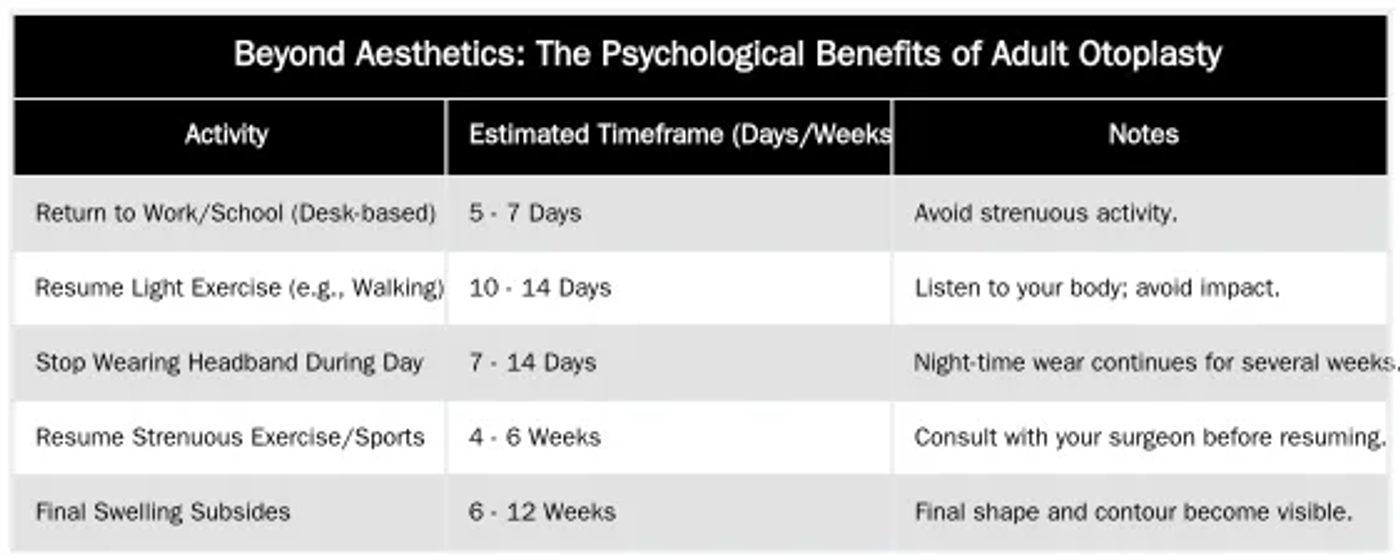
Initial healing is quick, but full results appear over several weeks as swelling subsides. Adults can often return to office work within a week, while children should stay home from school for a similar period. A protective headband is recommended for several weeks, especially at night, to prevent injury to the healing ears. Strenuous activities and contact sports must be avoided for four to six weeks. For more details, see this complete guide to ear correction.
Considering Pinnaplasty? Your Next Steps with Mr. Vijayan
The first step for anyone exploring ear correction is to seek expert advice from a qualified plastic surgeon. A consultation provides a personalised assessment and a clear understanding of the procedure, risks, and expected outcomes for pinnaplasty for adults or children.
Personalized Consultation for Prominent Ear Correction
During a consultation, Mr. Roshan Vijayan will listen to your concerns, evaluate your anatomy, and discuss the most appropriate surgical approach. This is an opportunity to ask questions and make an informed decision. To learn more or to schedule your appointment in Hertfordshire or London, review the information on prominent ear correction and contact our office.
Conclusion
Pinnaplasty is effective for adults and children, but the approach must be tailored to the patient's age. Key differences include cartilage flexibility, anaesthesia options, and patient motivation. For adults, the procedure addresses long-standing self-consciousness and boosts confidence. An expert approach focused on natural, balanced results and comprehensive care ensures a lasting, positive transformation. To begin, contact us to schedule a consultation. For other facial or skin procedures, you can also Book your skin procedure.
Frequently Asked Questions
How does the surgical technique for pinnaplasty in adults differ from the procedure in children?
The primary difference lies in the ear cartilage's consistency. In adults, the cartilage is firmer and more rigid than in children, often requiring specialised techniques like scoring to effectively reshape it. A child's softer, more pliable cartilage is more easily moulded into its new, desired position.
What type of anaesthesia is used for pinnaplasty for adults?
A key advantage of pinnaplasty for adults is that it can usually be performed safely and comfortably under local anaesthetic, sometimes with light sedation. This approach allows for a quicker post-procedure recovery compared to the general anaesthetic that is almost always required for children undergoing ear correction surgery.
What is the recovery period like after ear correction surgery for an adult?
Recovery typically involves wearing a protective headband for a few weeks, initially full-time and then just at night, to support the ears as they heal. While adults are generally very diligent with aftercare, they must plan around work and daily commitments. Most patients can resume non-strenuous activities within about one week.
What are the psychological benefits of otoplasty for adults?
Adults seeking this procedure have often felt self-conscious about their ears for many years, impacting hairstyle choices and confidence. The psychological benefits following successful ear surgery can be profound, leading to a significant boost in self-esteem and a newfound sense of freedom. This positive change is a primary motivation for many patients.
Are the results and risks of pinnaplasty comparable for adults and children?
The results are excellent for both groups, achieving a natural and balanced appearance. The surgical risks are very similar and low, but adults must consider how lifestyle factors like smoking or certain medical conditions can affect the healing process. A thorough consultation ensures the procedure is safe and appropriate for each individual.
How can I find out if I am a good candidate for pinnaplasty for adults?
The best way to determine your suitability is to schedule a personal consultation with a specialist consultant plastic surgeon. Mr. Roshan Vijayan will assess your ear anatomy, listen to your aesthetic goals, and develop a tailored surgical plan. To take the next step, you can book your consultation to discuss your options in detail.