
A successful breast reduction recovery extends beyond the first week, involving key milestones and care routines. This guide details healing phases, symptom management, and expert guidance from Mr. Roshan Vijayan for a natural, well-proportioned outcome.
Breast Reduction Recovery: Navigating Your Healing Journey
A successful breast reduction recovery extends significantly beyond the first week, involving progressive healing and a gradual return to daily activities. This period focuses on managing discomfort, reducing swelling and bruising, and adhering to post-operative care guidelines. Key aspects include the removal of surgical drains, consistent wear of a compression garment, effective pain management, and initiating scar management. Understanding these phases is crucial for achieving a natural, well-proportioned outcome and resuming normal routines safely.
Mr. Roshan Vijayan, a Consultant Plastic Surgeon, provides expert guidance throughout the mammoplasty recovery process. His approach prioritizes safe, tried-and-tested techniques to ensure balanced aesthetic results and comprehensive post-operative support.
To explore your options, contact us to schedule your consultation. You can also reach us via: Request a Callback
A successful breast reduction recovery extends beyond the first week, involving milestones and care routines for returning to daily life. This guide covers the period after week one, detailing healing phases, symptom management, and the role of expert guidance from a consultant plastic surgeon like Mr. Roshan Vijayan for a natural, well-proportioned outcome.
What are the key milestones in breast reduction recovery beyond the first week?
After the first week, mammoplasty recovery shifts to progressive healing and a gradual return to normal activities. Key milestones include removing surgical drains, a significant decrease in pain, transitioning to a supportive sports bra, and attending the first follow-up appointment to assess healing.
The Initial Transition: Weeks 2-3
During weeks 2-3, comfort and mobility improve. The most significant pain subsides, transitioning to soreness or tenderness. If surgical drains were used, they are often removed within this timeframe, providing relief and making movement easier. Your surgeon will provide instructions on showering and incision care.
You will transition from a surgical compression garment to a soft, supportive, non-wired sports bra. Gentle movement is key; short, regular walks are encouraged to promote blood circulation and prevent clots. Lifting, pushing, or pulling heavy objects remains off-limits. For more detail, review the week-by-week recovery timeline.
Progressing Towards Normalcy: Weeks 4-6
By weeks four to six, most patients feel more like themselves. Swelling continues to decrease, though some residual puffiness is normal and can persist for months. You will have one or more follow-up appointments with your surgeon to monitor incision healing and breast shape.
Mobility increases substantially. You may be cleared to reintroduce lower-body exercise and lift your arms above your shoulders. Follow your surgeon's guidance, as progressing too quickly can strain incisions and impede healing. Active scar management often begins at this stage.
Navigating the Recovery Journey: Practical Care and Comfort
Effective post-operative care is key for a comfortable healing process and the best aesthetic result. It involves managing discomfort, controlling swelling, and adhering to activity guidelines.
Effective Pain Management and Swelling Reduction
While acute pain is in the first week, managing discomfort continues. Most patients transition from prescribed pain medication to over-the-counter options like paracetamol. Take medication as advised to stay ahead of discomfort and facilitate better rest.
Swelling and bruising are normal. Wearing your compression garment or supportive bra as directed is the primary way to control swelling. It provides gentle pressure, supports healing tissues, and helps shape the breasts. Adequate rest, particularly sleeping in the correct position, also helps manage swelling and comfort.
Activity Restrictions and Gradual Progression
Respecting activity limitations is critical to prevent complications. The following tables provide a general guide; your timeline will be personalized by Mr. Vijayan based on your healing progress.
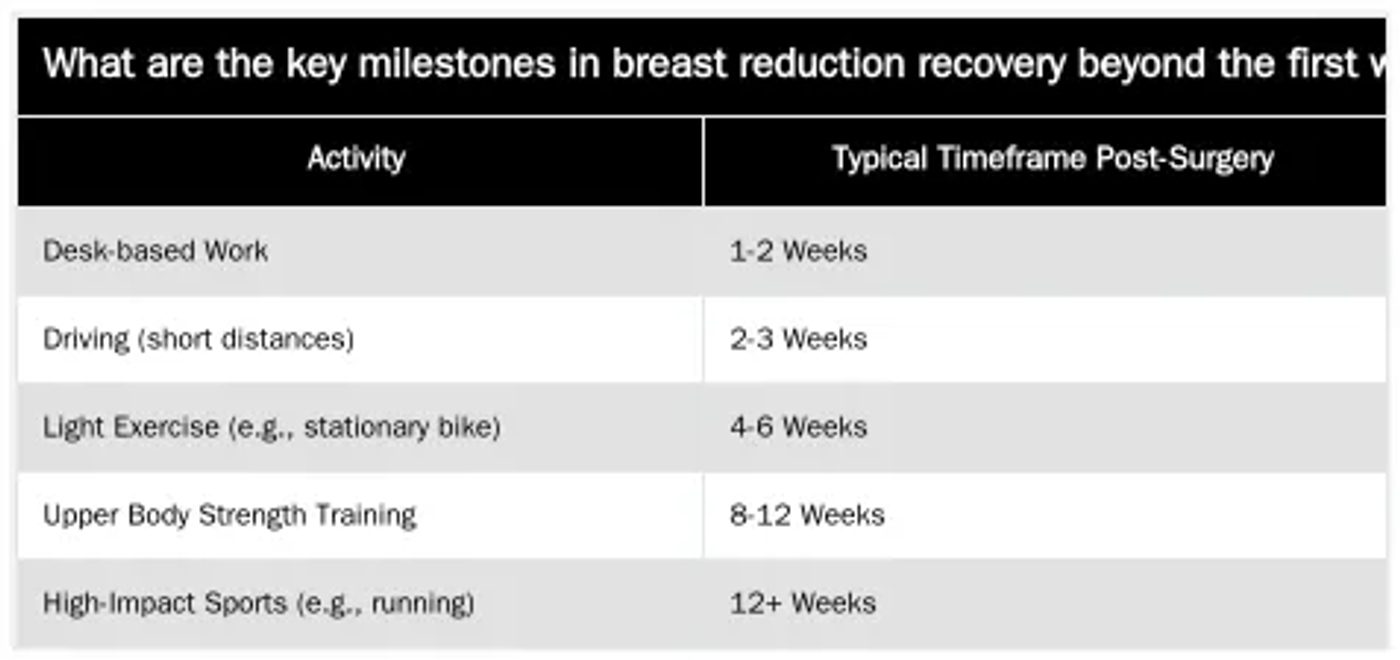
Note: This timeline is an estimate. Always get clearance from your surgeon before resuming activities.
Recovery Do's and Don'ts: Weeks 2-6
- Guideline — What to Do — What to Avoid
- Movement — Gentle walking to promote circulation. — Lifting anything heavier than a full kettle.
- Support — Wear your supportive surgical or sports bra 24/7 as advised. — Going braless or wearing underwired bras.
- Incision Care — Keep incisions clean and dry; follow specific washing instructions. — Soaking in baths, hot tubs, or swimming pools.
- Rest — Prioritise sleep and listen to your body's need for rest. — Pushing through fatigue or discomfort.
Adhering to these guidelines helps protect your incisions and supports optimal healing.
Scar Management and Sensation Changes: Long-Term Care
After the initial healing phase, common patient concerns include scar appearance and changes in breast sensation. Proactive care and understanding these processes are key to long-term satisfaction.
Optimizing Scar Healing and Minimizing Visibility
Effective scar management begins once incisions have fully closed, typically around 4-6 weeks post-surgery. Mr. Vijayan will provide specific instructions, which may include:
- Silicone Treatments: Silicone gels or sheets are clinically shown to help flatten and fade scars by hydrating the tissue.
- Gentle Massage: Once cleared by your surgeon, massaging the scars can help break down firm scar tissue and improve flexibility.
- Sun Protection: Scars are highly susceptible to sun damage, which can cause them to darken permanently. Applying a high-SPF (50+) sunscreen to the scar area is crucial for at least the first year.
Scars mature over 12-18 months, gradually softening and lightening. Patience and consistent care are essential for the best cosmetic result. For more information, see our guide to minimizing breast reduction scars.
Understanding and Adapting to Nerve Sensation Changes
Changes in nerve sensation in the breasts and nipples are common after surgery. The procedure can stretch or disrupt small nerve endings, causing numbness, tingling, or hypersensitivity. For most patients, normal sensation gradually returns over several months to a year as nerves heal and regenerate.
In some cases, sensation may not return completely to its pre-surgical state. Discuss any concerns about sensation with your surgeon during follow-up appointments. They can provide reassurance and monitor your progress.
Expert Guidance for a Smooth Recovery with Mr. Vijayan
A successful breast reduction recovery is a partnership between the patient and surgeon. A consultant-led approach ensures you receive expert, personalized guidance tailored to your needs and progress.
The Importance of Follow-Up Appointments
Regular follow-up appointments are essential for safe and effective post-operative care. These visits allow Mr. Vijayan to assess your healing, inspect incision sites for complications, manage dressings, and answer questions. They are crucial for adjusting your care plan and ensuring an optimal outcome.
This structured aftercare is an integral part of the breast reduction procedure, providing professional oversight. The appointment schedule will be provided before your surgery.
Personalized Care and Addressing Concerns
Every patient heals differently. Mr. Vijayan and his team provide tailored advice based on your recovery, not a one-size-fits-all protocol. This personalized approach ensures concerns about pain, swelling, or scar appearance are addressed promptly.
A direct point of contact supports the healing experience. This commitment to patient safety and individualized care aligns with guidelines from bodies like the British Association of Aesthetic Plastic Surgeons (BAAPS). For a broader understanding of procedures, see our complete guide to aesthetic breast surgery.
Returning to Your Routine: Exercise, Work, and Final Results
The final recovery phase involves safely reintroducing normal activities as your final results take shape. This requires patience and a gradual approach.
Gradual Return to Exercise and Physical Activity
Returning to exercise must be cautious to avoid injury and protect your results. The process is typically phased:
- Weeks 2-4: Focus on light walking. Avoid any activity that causes bouncing or strains the chest muscles.
- Weeks 4-6: With your surgeon's approval, you can often introduce lower-body exercises like the stationary bike or elliptical machine.
- Weeks 6-8: Light upper-body movements and resistance training may be slowly incorporated, starting with very low weights.
- After 8-12 Weeks: Most patients can gradually return to more strenuous activities like running, weightlifting, and other sports, pending final clearance from their surgeon.
Listen to your body. If an activity causes pain or discomfort in the chest area, stop and consult your surgical team.
When Can You See the Final Results?
While you will notice a significant difference in breast size and shape immediately, the final aesthetic result takes time. For the first few months, residual swelling can make the breasts appear high, firm, or "boxy."
Over 3 to 6 months, swelling resolves, and breast tissue softens and settles into a more natural, rounded shape—a process called "dropping and fluffing." Final contours and scar appearance continue to refine for up to 18 months post-surgery, a timeline supported by healthcare resources like the NHS.
Your Next Steps Towards a Balanced Aesthetic
The weeks following the initial healing phase are critical for managing activity, caring for scars, and achieving the final results. A partnership with an experienced consultant plastic surgeon ensures expert support throughout the process.
If you are considering breast reduction surgery and want to learn more about achieving a natural, well-proportioned aesthetic, contact us to discuss your goals. For a personalised consultation with Mr. Roshan Vijayan, Request a Callback.
Frequently Asked Questions
What key milestones should I expect during my breast reduction recovery after week one?
After the first week, your breast reduction recovery focuses on progressive healing. Key milestones include the removal of any surgical drains, a significant decrease in pain, and transitioning from a surgical bra to a supportive sports bra. You will also have your first post-operative follow-up appointment with Mr. Vijayan to assess your healing progress.
How long will swelling and bruising last during my breast reduction recovery?
While the most noticeable swelling and bruising typically subside within the first two to three weeks, some residual swelling is normal and can persist for several months. The final, settled shape and size of your breasts will become apparent at around the six-month mark as the healing process completes.
When can I return to work and exercise after the procedure?
Your return to normal activities depends on your individual healing and the nature of your work. Most patients with desk-based jobs can return within two to three weeks, while more strenuous jobs require a longer period. Light activities like walking are encouraged, but high-impact exercise and heavy lifting must be avoided for at least six to eight weeks, as advised by your surgeon.
What is the most important aspect of long-term breast reduction recovery care?
Consistent and diligent aftercare is crucial for achieving the best possible outcome from your breast reduction recovery. This includes wearing your support garment as directed, following all scar care instructions once your incisions have fully healed, and attending all scheduled follow-up appointments. Patience is essential, as your body needs adequate time to heal and settle into its new, natural contour.
Will I regain normal sensation in my breasts after surgery?
It is common to experience numbness or altered sensation, particularly around the nipples and lower breast area, following surgery. Sensation typically begins to return gradually over several months, though the full process can take up to a year or more. The extent of sensation recovery is unique to each individual.
How can I ensure my breast reduction recovery is guided by an expert?
A successful outcome starts with choosing a board-certified consultant plastic surgeon who prioritises safe techniques and detailed aftercare. A thorough consultation is the first step to understanding the procedure and what to expect during your personal breast reduction recovery. To discuss your goals with Mr. Vijayan, please request a callback to schedule an appointment.