
Not every tummy tuck involves the same amount of skin removal. A mini tummy tuck focuses on the lower abdomen, a full tummy tuck treats the area above and below the belly button, and a fleur-de-lis tummy tuck is designed for more extensive loose skin affecting both the height and width of the abdomen.
Medically Reviewed by Mr Vijayan | BSc (Hons), MBBS, FRCS (Plast), Executive MBA, PgCert Clinical Education | Last Updated September 2026
Not every tummy tuck involves the same amount of skin removal. A mini tummy tuck focuses on the lower abdomen, a full tummy tuck treats the area above and below the belly button, and a fleur-de-lis tummy tuck is designed for more extensive loose skin affecting both the height and width of the abdomen.
These three tummy tuck types also use different incision patterns and provide different degrees of correction. The most appropriate procedure depends on the location of the loose skin, how far it extends and whether the underlying abdominal muscles also require repair.
The Three Main Types of Tummy Tuck
The extent of abdominoplasty is determined by the amount and distribution of tissue requiring correction. Loose skin confined below the belly button requires a different approach from laxity affecting the upper abdomen or extending across the body in more than one direction.
Mini Tummy Tuck
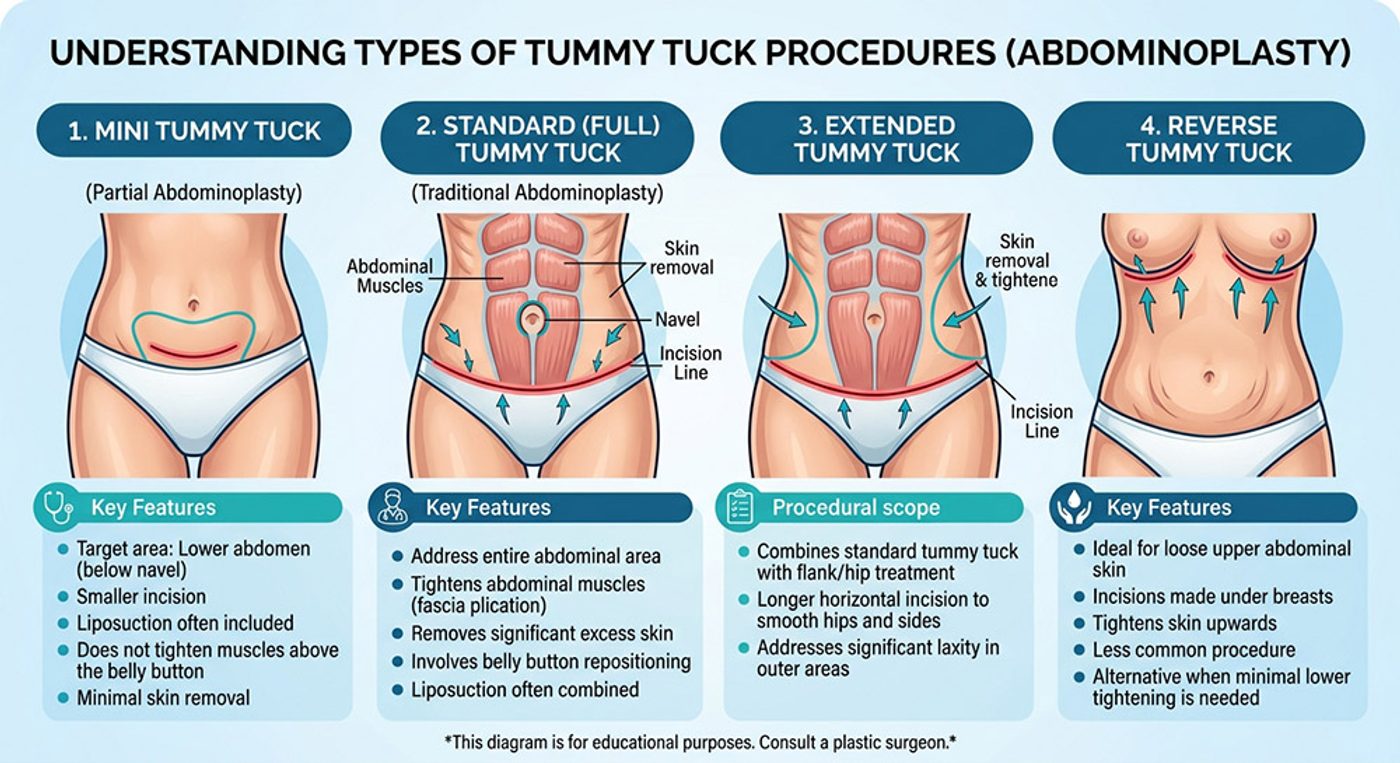
A mini tummy tuck removes a relatively small amount of excess skin and selected fat from below the belly button. It uses a shorter incision across the lower abdomen and does not generally require the belly button to be repositioned. Muscle tightening may be possible within the lower treatment area, but the procedure cannot correct loose skin extending across the upper abdomen.
Full Tummy Tuck
A full tummy tuck treats loose skin across the upper and lower abdomen. A low horizontal incision allows the abdominal skin to be lifted and pulled down, while an incision around the belly button keeps it in a natural position within the tightened skin. Separated or weakened abdominal muscles can also be repaired when required.
Fleur-de-Lis Tummy Tuck
A fleur-de-lis tummy tuck is designed for extensive loose skin affecting the abdomen from top to bottom and from side to side. In addition to the low horizontal incision used for a full tummy tuck, it requires a vertical incision through the centre of the abdomen. This allows Mr Roshan Vijayan to remove tissue in both directions and may be appropriate after substantial weight loss when a full tummy tuck would not remove enough loose skin.
Full vs Mini Tummy Tuck: What Is the Difference?
A mini tummy tuck treats only the lower abdomen, whereas a full tummy tuck addresses loose skin above and below the belly button. This makes a mini procedure suitable for a smaller, more localised concern, but it limits the extent of correction it can achieve.
A full tummy tuck requires a longer incision and usually involves repositioning the belly button. It also provides greater access to the abdominal wall when muscle repair is required. If loose skin extends into the upper abdomen, a mini tummy tuck will not treat the full concern.
How Does a Fleur-de-Lis Tummy Tuck Differ From a Full Tummy Tuck?
During a full tummy tuck, the abdominal skin is pulled down, and a horizontal section of excess tissue is removed. This tightens the abdomen from top to bottom but may leave some looseness across its width when the skin has stretched significantly.
A fleur-de-lis tummy tuck also removes a vertical section of skin from the centre of the abdomen. This allows the waist and central abdomen to be narrowed simultaneously, although it creates an additional vertical scar. The procedure is reserved for patients whose degree of skin laxity justifies this more extensive approach.
Mini, Full and Fleur-de-Lis Tummy Tucks Compared
The main differences between the three procedures concern the area treated, the amount of tissue removed and the incisions required.
Feature
Mini Tummy Tuck
Full Tummy Tuck
Fleur-de-Lis Tummy Tuck
Area treated
Mainly below the belly button
Upper and lower abdomen
Full height and width of the abdomen
Amount of loose skin
Limited
Moderate to extensive
Extensive
Incision pattern
Shorter horizontal incision
Longer horizontal incision and an incision around the belly button
Horizontal and vertical incisions
Belly button repositioned
Usually no
Usually yes
Usually yes
Muscle repair
May be possible in the lower abdomen
Can be included where required
Can be included where required
Main limitation
Cannot treat the upper abdomen
May not remove significant looseness across the width of the abdomen
Leaves an additional vertical scar
How Is the Appropriate Tummy Tuck Type Selected?
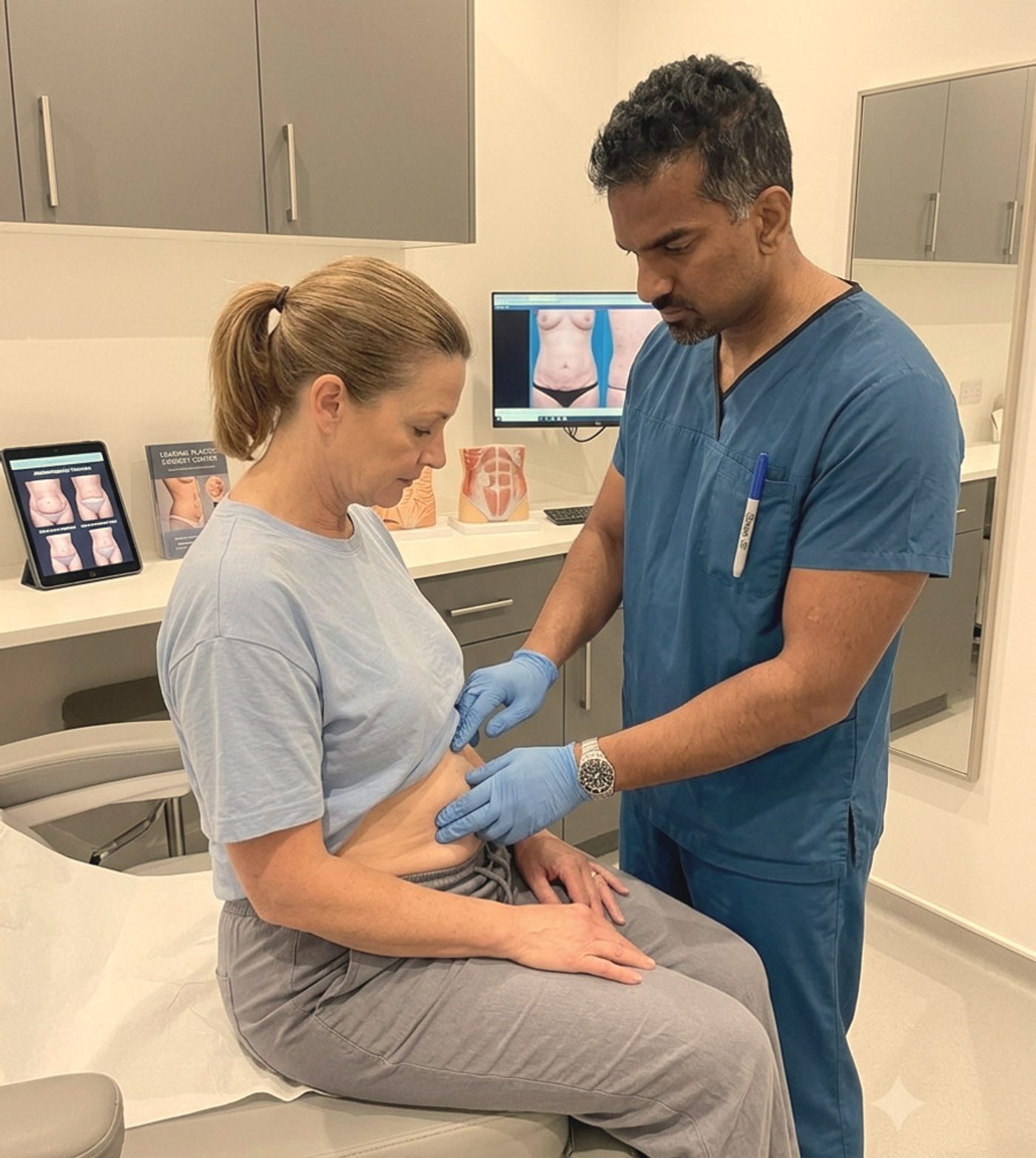
Mr Vijayan assesses how much loose skin is present, where it sits and whether it extends in more than one direction. He also examines the abdominal muscles, localised areas of fat, existing scars and the contours of the waist and flanks.
A limited procedure is suitable only when it can address the full area of concern. Where loose skin extends above the belly button or across the width of the abdomen, a full or fleur-de-lis tummy tuck may provide a more complete correction.
Choosing Between the Different Types of Tummy Tuck
A mini tummy tuck provides a focused correction below the belly button, while a full tummy tuck reshapes the upper and lower abdomen. Fleur-de-lis abdominoplasty is intended for more extensive skin laxity that requires treatment in two directions.
The correct procedure depends on the individual anatomy and the extent of correction required. If you are considering abdominoplasty, please contact us for more information or to arrange a consultation with Mr Roshan Vijayan.
Tummy Tuck Types FAQs
What are the three main types of tummy tuck?
The three main types are mini, full and fleur-de-lis tummy tuck. They treat different areas and degrees of loose abdominal skin, using different incision patterns to achieve the required correction.
What is the difference between a mini and full tummy tuck?
A mini tummy tuck treats a limited area below the belly button, while a full tummy tuck treats the upper and lower abdomen. A full procedure usually involves repositioning the belly button and provides wider access for abdominal muscle repair.
When is a mini tummy tuck suitable?
A mini tummy tuck may be suitable when loose skin is confined to the lower abdomen and the upper abdomen remains relatively firm. It cannot correct laxity extending across the full abdomen.
When is a fleur-de-lis tummy tuck needed?
A fleur-de-lis tummy tuck may be needed when extensive loose skin affects both the height and width of the abdomen. It is particularly relevant after substantial weight loss when a full tummy tuck would not remove enough tissue.
Does every type of tummy tuck reposition the belly button?
A mini tummy tuck does not generally require the belly button to be repositioned. Full and fleur-de-lis tummy tucks usually release and reposition the belly button within the tightened abdominal skin.
Can all tummy tuck types repair separated abdominal muscles?
Mini, full, and fleur-de-lis tummy tucks can include muscle repair, but the areas accessible with each procedure differ. A mini tummy tuck cannot provide full access when the separation extends into the upper abdomen.
Which tummy tuck leaves the smallest scar?
A mini tummy tuck generally leaves the shortest scar because it treats a smaller area below the belly button. Full and fleur-de-lis procedures require longer or additional incisions to remove more extensive loose skin.
Do recovery times differ between tummy tuck types?
Recovery times vary depending on the extent of skin removal, muscle repair, and any additional treatment performed. A mini tummy tuck may involve a shorter recovery, while full and fleur-de-lis procedures generally require more time.
Which tummy tuck is usually performed after pregnancy?
A full tummy tuck is frequently considered when pregnancy has affected the skin and muscles across the upper and lower abdomen. A mini tummy tuck may be sufficient when the concern is limited to the area below the belly button.
Which tummy tuck is suitable after major weight loss?
A full or fleur-de-lis tummy tuck may be suitable after major weight loss, depending on the amount and distribution of loose skin. Fleur-de-lis abdominoplasty is considered when the abdomen requires tightening in both horizontal and vertical directions.