
A tummy tuck for core strength offers functional benefits beyond aesthetics by repairing separated abdominal muscles (diastasis recti). This surgical restoration enhances core stability, improves posture, and can alleviate related physical discomfort, leading to improved well-being.
Tummy Tuck for Core Strength: Enhancing Stability and Posture
A tummy tuck for core strength directly addresses functional abdominal wall issues, primarily repairing diastasis recti, the separation of rectus abdominis muscles. This procedure, known as functional abdominoplasty, restores the abdominal midline, significantly enhancing core stability and improving posture. Beyond aesthetics, it provides crucial support for the spine and internal organs, often alleviating chronic back pain and contributing to overall physical well-being. Understanding this surgical repair is key to appreciating its comprehensive benefits.
Mr. Roshan Vijayan, a Consultant Plastic Surgeon, specializes in abdominoplasty, offering expert surgical solutions for abdominal muscle repair. His approach focuses on restoring structural integrity and delivering natural, well-proportioned outcomes through safe, tested techniques.
To explore your options, contact us to schedule your consultation. You can also reach us via: Request a Callback
A tummy tuck for core strength offers functional benefits beyond aesthetics by addressing the abdominal wall's physical integrity. While many associate abdominoplasty with a flatter stomach, its primary functional purpose is to repair separated abdominal muscles, a condition known as diastasis recti. This surgical restoration enhances core stability, improves posture, and can alleviate related physical discomfort.
Understanding Tummy Tuck for Core Strength: More Than Just Aesthetics
A functional abdominoplasty prioritises restoring the abdominal wall's structural integrity and strength. Unlike a cosmetic procedure focused on removing excess skin and fat, its central component is repairing separated rectus abdominis muscles. This repair enhances core function, providing a stable foundation for the torso and spine. The procedure is a reconstructive technique that rebuilds the abdominal midline.
What is Diastasis Recti and Why Does it Matter for Your Core?
Diastasis recti is the partial or complete separation of the rectus abdominis muscles, which meet at the midline of your stomach. This condition is common during and after pregnancy, as the uterus stretches the abdominal muscles. It can also result from significant weight fluctuations or improper exercise techniques. When these muscles separate, the connective tissue (linea alba) joining them stretches and weakens, compromising the core's ability to stabilise the trunk and support internal organs. This can lead to a protruding abdomen, reduced physical strength, and other functional issues. This is a key reason many consider post-pregnancy body contouring.
The Surgical Approach to Abdominal Muscle Repair
During a functional tummy tuck, the surgeon brings the separated rectus muscles back to the midline and secures them with permanent internal sutures. This process, known as plication, tightens the abdominal wall, restoring its position and tension. Repairing this separation rebuilds the core's "inner corset," providing lost stability. Surgical repair is the most effective method for correcting significant diastasis recti, as exercise alone often cannot rejoin separated muscles. The full procedure is detailed in our guide to abdominoplasty.
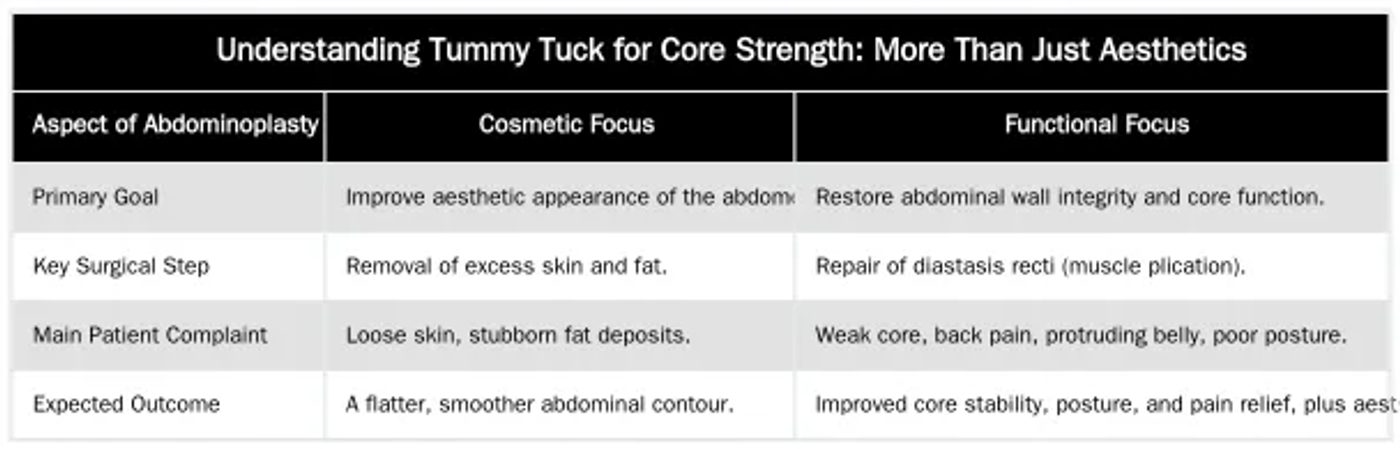
Comparison of cosmetic versus functional goals in abdominoplasty.
How Does Abdominal Muscle Repair Enhance Core Stability and Posture?
Repairing diastasis recti during an abdominoplasty directly impacts core stability and posture. By re-establishing the abdominal wall's structural integrity, the procedure creates a stronger system for supporting the spine and torso.
Rebuilding the Abdominal Wall's Structural Integrity
The core muscles act as a natural corset providing support and stability. When diastasis recti occurs, this corset becomes loose and ineffective. The surgical repair tightens this corset by suturing the separated muscles back together. This creates a firm abdominal wall that can manage intra-abdominal pressure and transfer forces across the body. A stable core is essential for physical movements, from lifting to standing upright.
The Direct Link Between a Strong Core and Spinal Support
A weakened abdominal wall forces lower back muscles to overcompensate to maintain posture. This chronic strain often causes lower back pain and poor spinal alignment. Restoring abdominal muscle strength with a functional tummy tuck allows them to resume supporting the spine. This rebalancing reduces the load on back muscles, improving posture. Patients often report standing taller with less back strain after recovery, as their reinforced core provides anterior spinal support. The benefits of abdominoplasty extend beyond visible changes.
Alleviating Back Pain and Pelvic Floor Dysfunction with a Tummy Tuck
Restoring core integrity through abdominoplasty can also affect chronic pain and other functional issues. Strengthening the central support system can alleviate lower back pain and indirectly support the pelvic floor, addressing related symptoms.
Addressing the Root Cause of Post-Pregnancy Back Pain
Many people, especially after pregnancy, experience chronic lower back pain linked to a weakened core from diastasis recti. Without adequate abdominal support, the lumbar spine experiences increased stress and improper load distribution, causing muscle fatigue and pain. According to studies in Plastic and Reconstructive Surgery, abdominoplasty with rectus muscle plication has been shown to significantly improve back pain and functional disability in postpartum women. Surgically repairing the abdominal wall restores the natural support balance, relieving chronic strain on back muscles.
Indirect Support for Pelvic Floor Health and SUI
The core and pelvic floor muscles work together to manage intra-abdominal and pelvic pressure. A weakened abdominal wall from diastasis recti can disrupt this system, contributing to Stress Urinary Incontinence (SUI), where coughing or sneezing causes urine leakage. While a tummy tuck does not directly operate on the pelvic floor, strengthening the abdominal wall can improve this system's function. A more stable core provides better support, which may reduce pressure on the bladder and pelvic floor, improving SUI symptoms for some patients.
Is a Functional Tummy Tuck Right for You? Expert Insights from Mr. Roshan Vijayan
Determining if a functional abdominoplasty is right for you requires evaluating your physical condition and personal goals. A consultation with a qualified plastic surgeon is essential to ensure the procedure aligns with your needs and can be performed safely. This is important when considering a combined tummy tuck and hernia repair.
Identifying Candidates for Functional Abdominoplasty
Ideal candidates for a functional tummy tuck are in good health, at a stable weight, and bothered by the functional consequences of a weakened core. This often includes:
- Individuals with significant diastasis recti after pregnancy or weight loss.
- Those experiencing chronic lower back pain that is linked to a weak abdominal wall.
- People with poor posture resulting from a lack of core support.
- Individuals who also have a ventral hernia that can be repaired concurrently.
Candidates must have realistic expectations and understand the procedure is a reconstructive and contouring surgery, not a weight-loss solution.
The Importance of a Board-Certified Plastic Surgeon for Functional Outcomes
Aesthetic and functional success requires a surgeon experienced in reconstructive techniques. As a Consultant Plastic Surgeon on the GMC Specialist Register and a Fellow of the Royal College of Surgeons (FRCS(Plast)), Mr. Roshan Vijayan has extensive expertise. His consultant-led approach focuses on safe, tested surgical techniques for natural, well-proportioned results. A consultation allows for a personalised surgical plan that addresses your functional and aesthetic goals.
Recovery and Long-Term Core Strength: What to Expect After Abdominoplasty
Abdominoplasty recovery is a gradual process requiring patience and adherence to post-operative instructions. The focus is on proper healing of repaired muscles and tissues to build long-term core strength.
Navigating the Post-Operative Period for Optimal Healing
The initial weeks after surgery are crucial for healing. You will wear a compression garment to support the abdomen and reduce swelling. Activity will be limited to short, gentle walks to promote circulation. Avoid lifting, straining, or strenuous activity that could tension the muscle repair. Following a detailed after-care plan is essential for recovery and the best functional outcome.
Exercise After Tummy Tuck: Rebuilding and Maintaining Core Strength
You can reintroduce exercise once cleared by your surgeon, typically around 6-8 weeks post-surgery. Initially, focus on gentle movements and gradually rebuilding strength. Avoid traditional core exercises like crunches or sit-ups initially, as they can strain the repaired muscles. A phased approach focusing on deep core stability exercises like pelvic tilts and transverse abdominis engagement is recommended. A physiotherapist can provide a tailored programme to safely rebuild your core strength, preserving the surgery's functional benefits.
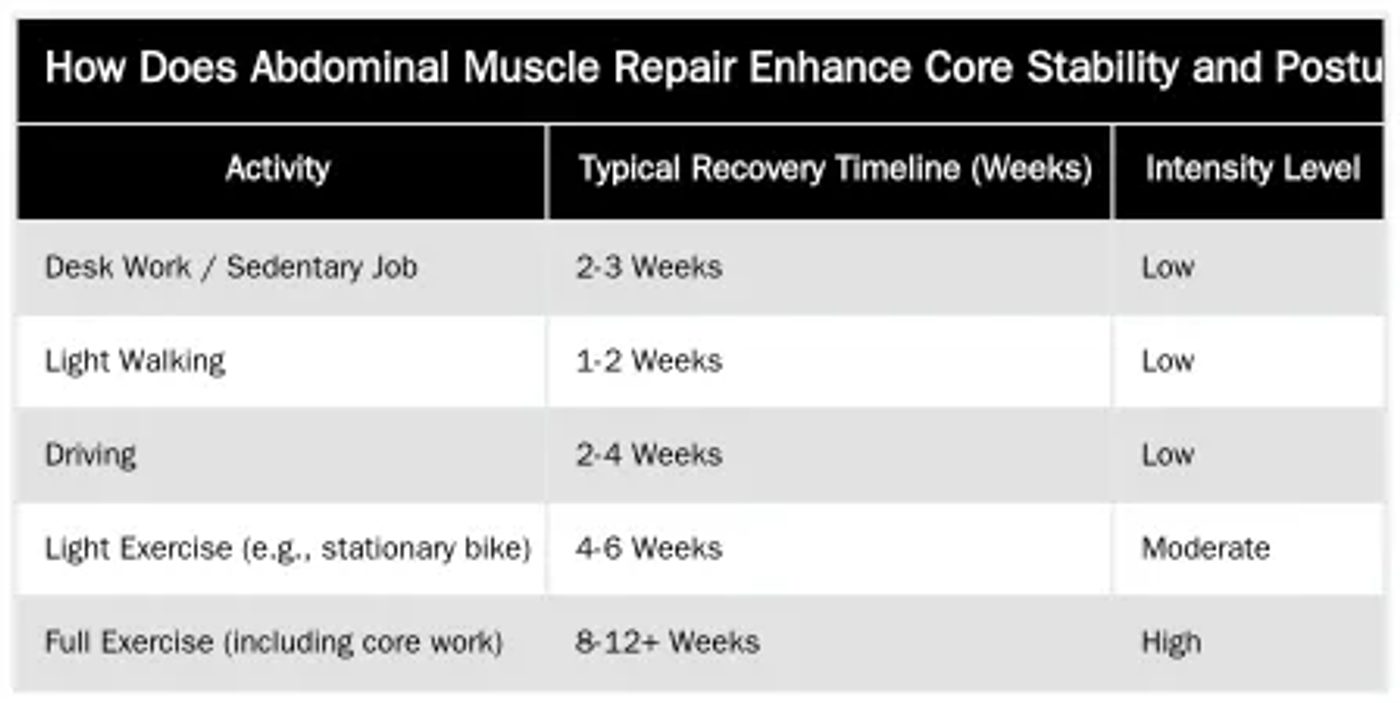
General recovery timeline for resuming activities after abdominoplasty. Individual experiences may vary.
Beyond Aesthetics: The Holistic Impact of a Stronger Core
A tummy tuck for functional restoration improves quality of life. Repairing the muscular structure provides a stronger, more stable core that supports better posture, alleviates back pain, and enhances physical capability. These functional gains, combined with aesthetic enhancement, contribute to renewed confidence and well-being. A tummy tuck for core strength is an investment in your appearance and long-term physical health.
To discuss how an abdominoplasty could improve your core function and well-being, contact us or Request a Callback to schedule a consultation with Mr. Roshan Vijayan.
Frequently Asked Questions
How does an abdominoplasty improve core strength?
A key part of the procedure is repairing diastasis recti, where abdominal muscles have separated. By suturing these muscles back together, a tummy tuck for core strength restores the structural integrity of the abdominal wall, creating a stronger internal corset.
Can a tummy tuck for core strength help with my chronic back pain?
Yes, it often can. A weakened core forces back muscles to overcompensate, leading to strain and pain. A tummy tuck for core strength provides essential support for the spine, which can significantly alleviate this discomfort for many patients.
Will my posture improve after a tummy tuck for core strength?
The surgery provides the foundational support for better posture by tightening your core muscles. While many patients notice an immediate improvement, consciously engaging your newly supported core will help maximise the long-term postural benefits.
Who is a good candidate for a tummy tuck for core strength?
While common after pregnancy, a tummy tuck for core strength is beneficial for any individual with weakened or separated abdominal muscles. This condition, known as diastasis recti, can also result from significant weight fluctuations, genetics, or previous surgery.
How soon can I exercise to build on my new core stability?
Mr. Vijayan provides a detailed after-care plan tailored to your recovery. Generally, light activity can resume in a few weeks, but strenuous core exercises are avoided for at least 6-8 weeks to ensure the muscle repair heals properly.
How can I determine if this procedure is right for me?
The best way to understand your options is through a one-on-one consultation with a specialist. Mr. Vijayan will assess your specific needs and discuss whether an abdominoplasty is the most suitable approach for you. To begin the process, you can request a callback to schedule an appointment.